
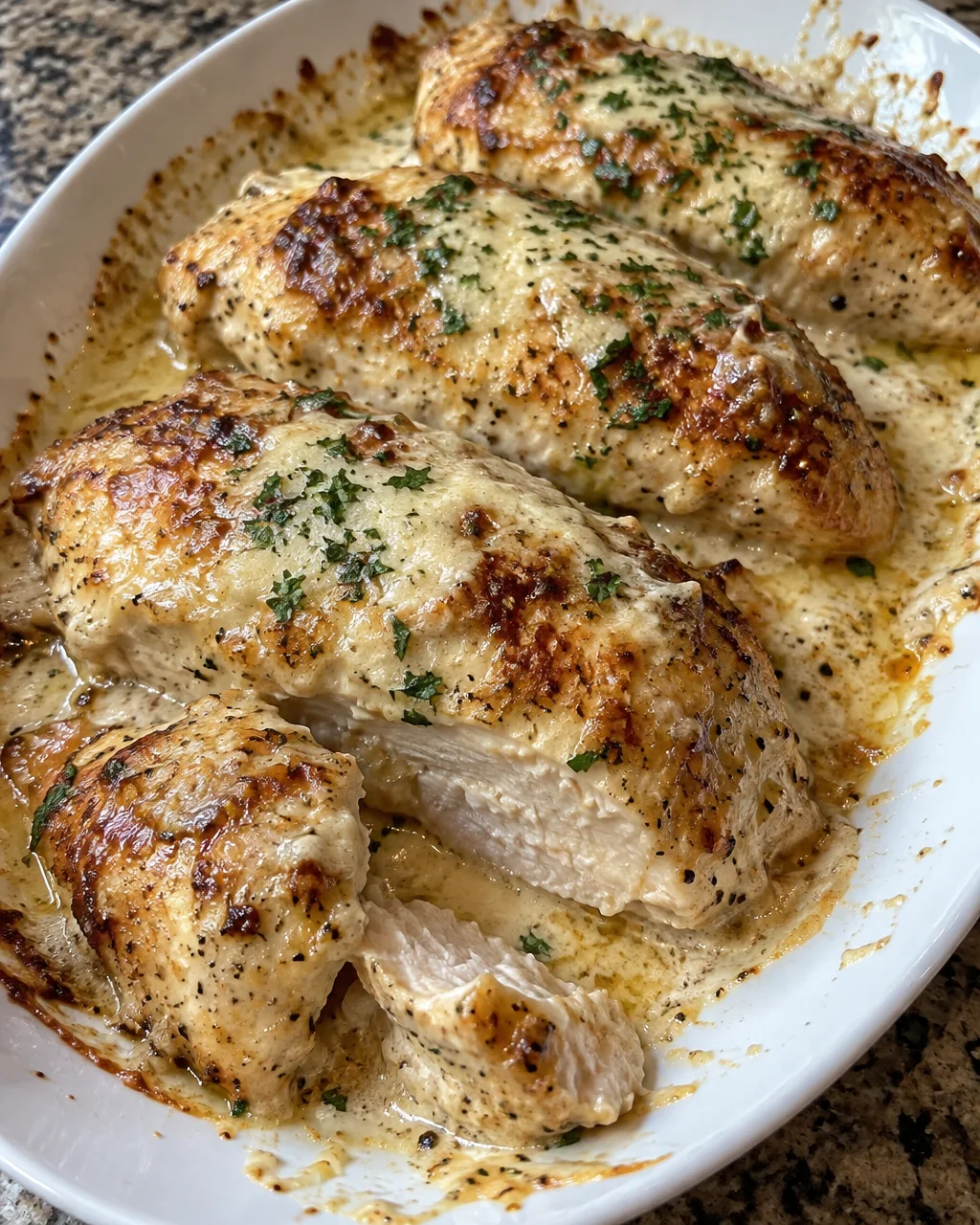
Busy evenings have a way of making dinner feel harder than it should. You open the refrigerator, spot a package of chicken breasts, and need a meal that tastes comforting without creating a sink full of dishes. Creamy chicken dinners such as cheddar Parmesan garlic butter chicken with penne fit that need beautifully.
This Baked Caesar Chicken with a Creamy Parmesan Sauce is equally practical, but it skips the stovetop and pasta. Caesar dressing supplies tangy, savory flavor, while sour cream softens its sharpness and helps create a rich sauce. Parmesan adds saltiness and forms a lightly golden top as the chicken bakes.
The result is juicy chicken covered in a thick, bubbly coating with plenty of garlic and Parmesan flavor. It feels special enough for company but remains approachable for a regular weeknight. Below, you will find precise ingredients, beginner-friendly instructions, variations, serving ideas, and storage tips to help you make it successfully.
Kitchen Essentials You’ll Need
A baking dish, mixing bowl, whisk, measuring tools, instant-read thermometer, and sturdy spoon are the main tools you need. Choose a 9-by-13-inch baking dish so four chicken breasts can sit in a single layer without overlapping. A ceramic, glass, or metal dish will work.
Use a medium mixing bowl and whisk to blend the Caesar dressing, sour cream, Parmesan, and seasonings into a smooth sauce. Measuring cups and spoons keep the sauce balanced, since too much dressing can make it thin or overly salty.
An instant-read thermometer is especially useful because chicken breasts vary in thickness. It gives you a more dependable doneness check than cooking time alone. A large spoon or flexible spatula makes it easy to coat each piece of chicken generously without wasting sauce.
Why You’ll Love This Recipe
This recipe delivers creamy comfort, bold Caesar flavor, and tender chicken with only about 10 minutes of hands-on preparation.
Rich, savory flavor: Caesar dressing brings garlic, lemony tang, and umami to the sauce. Sour cream rounds out those assertive flavors, while grated Parmesan contributes a nutty, salty finish.
Easy oven preparation: You do not need to sear the chicken or cook a separate sauce on the stove. Season the meat, stir the sauce together, coat the chicken, and let the oven handle the rest.
Family-friendly appeal: The seasonings are flavorful without being hot. The sauce also helps lean chicken breasts remain moist, making Baked Caesar Chicken with a Creamy Parmesan Sauce appealing to adults and children alike.
Practical for busy nights: The short ingredient list uses familiar supermarket staples, and the dish pairs with anything from steamed vegetables to mashed potatoes. Leftovers also reheat well when warmed gently.
When your family is craving a heartier cheese-and-pasta dinner, this creamy chicken with Parmesan and pasta shells offers a similarly comforting flavor profile.
Baked Caesar Chicken with a Creamy Parmesan Sauce Ingredients
Baked Caesar Chicken with a Creamy Parmesan Sauce combines seasoned chicken breasts with a balanced Caesar, sour cream, and Parmesan topping.
- 4 boneless, skinless chicken breasts, about 6 ounces each
- 1 tablespoon olive oil
- 1 teaspoon garlic powder
- 1/2 teaspoon onion powder
- 1/2 teaspoon kosher salt
- 1/4 teaspoon ground black pepper
- 1 cup creamy Caesar dressing
- 1/2 cup full-fat sour cream
- 1/2 cup finely grated Parmesan cheese
- 1 tablespoon fresh lemon juice
- 1 teaspoon Worcestershire sauce
- 2 tablespoons chopped fresh parsley, optional for garnish
Chicken breasts cook most evenly when they are similar in size and thickness. The olive oil lightly coats the baking dish and helps prevent sticking, while the measured salt, pepper, garlic powder, and onion powder season the meat beneath the sauce.
Creamy Caesar dressing is the foundation of the topping, so use one you already enjoy. Sour cream thickens it and tempers the dressing’s acidity. Finely grated Parmesan melts into the sauce more smoothly than large shreds and encourages light browning.
Fresh lemon juice brightens the rich dairy ingredients. Worcestershire sauce deepens the savory Caesar character, but it should remain a background note rather than overpowering the chicken.
How to Make Baked Caesar Chicken with a Creamy Parmesan Sauce Step by Step

Baked Caesar Chicken with a Creamy Parmesan Sauce takes about 40 minutes from start to finish and requires only basic mixing and baking skills.
Heat the oven and prepare the dish. Preheat the oven to 375°F. Brush the bottom and sides of a 9-by-13-inch baking dish with 1 tablespoon olive oil.
Prepare the chicken. Pat the four chicken breasts dry with paper towels. If one end is much thicker than the other, gently pound the thick portion to an even 3/4-inch thickness. Arrange the chicken in one layer in the prepared dish.
Season the meat. Mix the garlic powder, onion powder, kosher salt, and black pepper in a small cup. Sprinkle the seasoning mixture evenly over both sides of the chicken, then return each breast to the dish with its smooth side facing up.
Mix the creamy Parmesan sauce. In a medium bowl, whisk together the Caesar dressing, sour cream, finely grated Parmesan, lemon juice, and Worcestershire sauce. Continue stirring until the mixture is smooth and evenly combined.
Coat the chicken. Divide the sauce among the four breasts. Spread it over the tops and around the sides, keeping most of the coating on top. Make sure every piece is covered so the exposed surface does not dry out.
Bake until done. Place the uncovered baking dish on the center oven rack. Bake for 25 to 30 minutes, or until the sauce is bubbling and the thickest part of each chicken breast reaches 165°F. Very thick breasts may need up to 35 minutes.
Brown the top if desired. For additional color, switch the oven to broil for 1 to 2 minutes after the chicken reaches a safe temperature. Watch constantly because Parmesan can brown quickly.
Rest and garnish. Remove the dish from the oven and let the chicken rest for 5 minutes. Spoon sauce from the dish over each serving, then scatter the chopped fresh parsley on top.
Fun Variations You Can Try
These optional variations let you adjust the heat, protein, cheese, or presentation without changing the dependable method of the main recipe.
For a spicy Caesar version, stir 1/4 teaspoon crushed red pepper flakes into the sauce. You can also add 1/4 teaspoon cayenne pepper, although that creates noticeably more heat.
Boneless, skinless chicken thighs make a juicy substitute. Use four to six thighs totaling about 1 1/2 pounds and begin checking them after 25 minutes. They are safe at 165°F, though dark meat often becomes more tender around 175°F.
For extra crunch, combine 1/3 cup panko breadcrumbs with 1 tablespoon melted butter and sprinkle the mixture over the sauce before baking. This is an optional addition rather than part of the original ingredient list.
You can replace up to half the Parmesan with finely shredded mozzarella for a milder, stretchier topping. Keep some Parmesan in the mixture so the dish retains its recognizable Caesar character.
For a pasta-inspired change of pace, consider creamy Cajun chicken pasta with Parmesan and garlic. It offers a bolder, spicier alternative while keeping the satisfying combination of chicken and creamy cheese sauce.
How I Love to Serve It
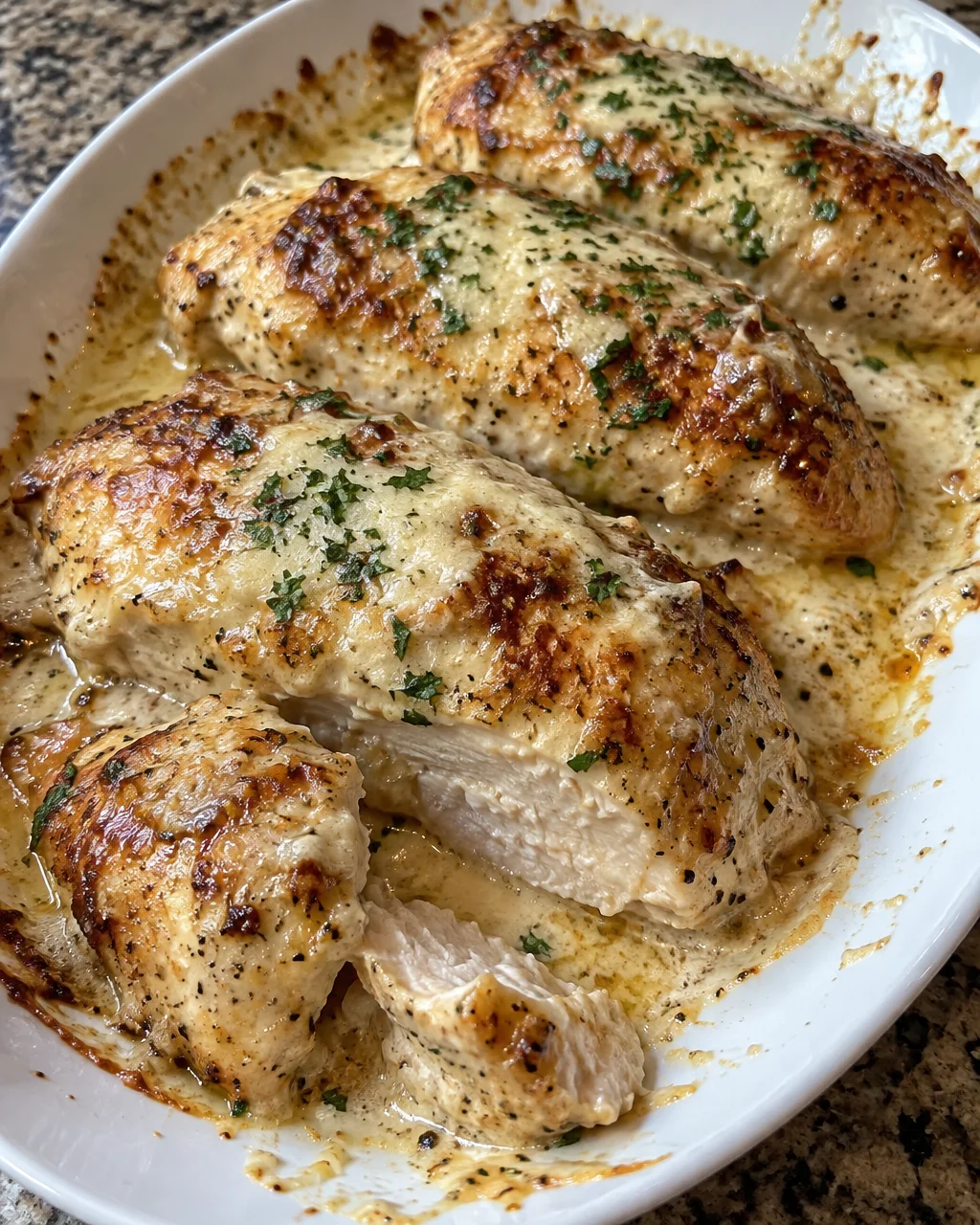
This creamy chicken is best served hot with a mild starch and a fresh vegetable to balance the rich Parmesan sauce.
Spoon the chicken onto warm plates, then add some of the sauce from the baking dish. Mashed potatoes are especially good because they catch every bit of the creamy topping. Buttered egg noodles, steamed rice, or roasted baby potatoes also work well.
For vegetables, try roasted broccoli, sautéed green beans, honey-glazed carrots, or oven-roasted asparagus. Their color and cleaner flavors provide contrast to the pale, rich sauce. A simple romaine salad with cucumber and tomatoes can make the meal feel lighter, but use a lemon vinaigrette instead of another Caesar dressing.
Warm dinner rolls or crusty garlic bread are useful when you want to stretch the meal for hungry diners. For a lower-carbohydrate plate, replace the starch with cauliflower mash or roasted zucchini.
Sparkling water with lemon is crisp enough to cut through the dairy-rich sauce. Unsweetened iced tea, cucumber water, or a lightly sweetened lemonade also complements the salty Parmesan and tangy dressing.
Helpful Tips from My Kitchen
The best results come from evening out the chicken, measuring the seasonings, and checking doneness with a thermometer.
Use evenly sized chicken breasts. Thick, uneven pieces may still be raw in the center when thinner ones are finished. Pound only the thickest section so each breast is approximately 3/4 inch thick.
Pat the chicken dry first. Removing surface moisture helps the seasonings stay on the meat rather than sliding into the bottom of the baking dish.
Consider the dressing’s salt level. Caesar dressings vary considerably. The recipe uses a restrained amount of kosher salt because the dressing, Parmesan, and Worcestershire sauce already contribute sodium.
Grate the Parmesan finely. Fine cheese disperses throughout the sauce and melts evenly. Coarse pre-shredded cheese may retain its shape and create a less cohesive topping.
Cook by temperature, not color alone. The creamy coating can become golden before an especially thick chicken breast is fully cooked. Insert the thermometer horizontally into the thickest section without touching the baking dish.
If the top needs more color, broil only after the chicken reaches 165°F. Resting for 5 minutes helps the juices settle and lets the hot sauce thicken slightly before serving.
Important Cooking Reminders
Safe handling, prompt storage, and gentle reheating keep this chicken both enjoyable and food-safe.
- Cook every chicken breast to an internal temperature of 165°F, measured in its thickest section. Refer to [External Link: USDA safe minimum cooking temperatures] for current federal food-safety guidance.
- Refrigerate leftovers within 2 hours of cooking. Store the chicken and sauce in an airtight container for up to 3 to 4 days.
- Freeze cooled portions in freezer-safe containers for up to 2 months. Sour cream sauces can separate slightly after thawing, but slow reheating and gentle stirring help restore their texture.
- Thaw frozen chicken overnight in the refrigerator. Reheat it covered in a 325°F oven until the center reaches 165°F, usually 15 to 20 minutes.
- For a single portion, microwave at 50 percent power in 45-second intervals. Spoon sauce over the sliced chicken first to help prevent dryness.
- Avoid overcrowding the baking dish or using ice-cold chicken straight from the refrigerator. Both can produce uneven cooking and extend the baking time.
Nutritional Information (Estimated)
One serving, based on four servings and including one-fourth of the sauce, contains approximately 650 calories, 7 grams of carbohydrates, 44 grams of fat, and 54 grams of protein. Sodium may range from roughly 1,200 to 1,600 milligrams because Caesar dressing and Parmesan brands differ significantly.
These values are estimates based on 6-ounce chicken breasts, full-fat sour cream, creamy Caesar dressing, olive oil, and all listed sauce ingredients. Garnish contributes very little. Actual nutrition will vary with product choices and the amount of sauce served.
Recipe Details
- Prep Time: 10 minutes
- Cook Time: 30 minutes
- Total Time: 40 minutes, plus a 5-minute rest
- Yield: 4 servings
Common Questions About Baked Caesar Chicken with a Creamy Parmesan Sauce
The most common questions about Baked Caesar Chicken with a Creamy Parmesan Sauce involve preparation timing, dairy substitutions, and reheating without drying out the meat.
Can I assemble Caesar chicken ahead of time?
Yes. Season the chicken and mix the sauce up to 24 hours in advance, but store them in separate covered containers in the refrigerator. When ready to cook, place the chicken in the oiled dish, spread on the sauce, and bake. Allow 3 to 5 extra minutes because the ingredients will be cold, and always verify that the center reaches 165°F.
What can I substitute for sour cream?
Plain full-fat Greek yogurt is the most practical substitute. Use 1/2 cup and avoid nonfat yogurt, which is more likely to become watery or curdle under prolonged heat. The finished sauce will taste slightly tangier and may be less rich. Keep the Caesar dressing, Parmesan, lemon juice, and Worcestershire sauce unchanged so the intended flavor stays balanced.
How do I reheat creamy Caesar chicken without drying it out?
Place the chicken in a small baking dish, spoon sauce over it, and cover tightly with foil. Warm at 325°F until the center reaches 165°F. For faster, more even heating, slice the chicken before reheating. A microwave also works when set to 50 percent power. Use short intervals and turn the pieces between each interval rather than heating continuously at full power.
Conclusion
Baked Caesar Chicken with a Creamy Parmesan Sauce turns familiar refrigerator staples into a rich, dependable dinner with minimal hands-on work.
The Caesar dressing gives the chicken a savory garlic flavor and gentle tang, while sour cream creates a smooth coating that protects the lean meat in the oven. Parmesan melts into the sauce and develops a golden surface, especially when you finish the dish briefly under the broiler. A squeeze of lemon keeps all that creaminess from feeling too heavy.
This recipe is practical enough for a Tuesday evening yet polished enough to serve when you want dinner to feel a little more thoughtful. You can prepare the sauce ahead, pair the chicken with whichever vegetables are already in the crisper, and choose a starch based on your family’s appetite. That flexibility is useful on the kind of evening when several half-finished ingredients are waiting in the refrigerator.
Remember that chicken-breast thickness matters more than the clock. A thermometer takes away the guesswork, and a short rest keeps the meat juicier when you cut into it. Those two small habits can make an uncomplicated baked dinner noticeably better.
When you need something creamy, savory, and comforting without managing several pans, give this recipe a place in your dinner rotation. Serve it with mashed potatoes, crisp green vegetables, or warm bread, and enjoy every spoonful of Parmesan sauce.
Schema hint: Recipe schema should include the recipe name, description, image, author, prep time, cook time, total time, four-serving yield, ingredient list, numbered instructions, nutrition estimate, and main-dish category.