
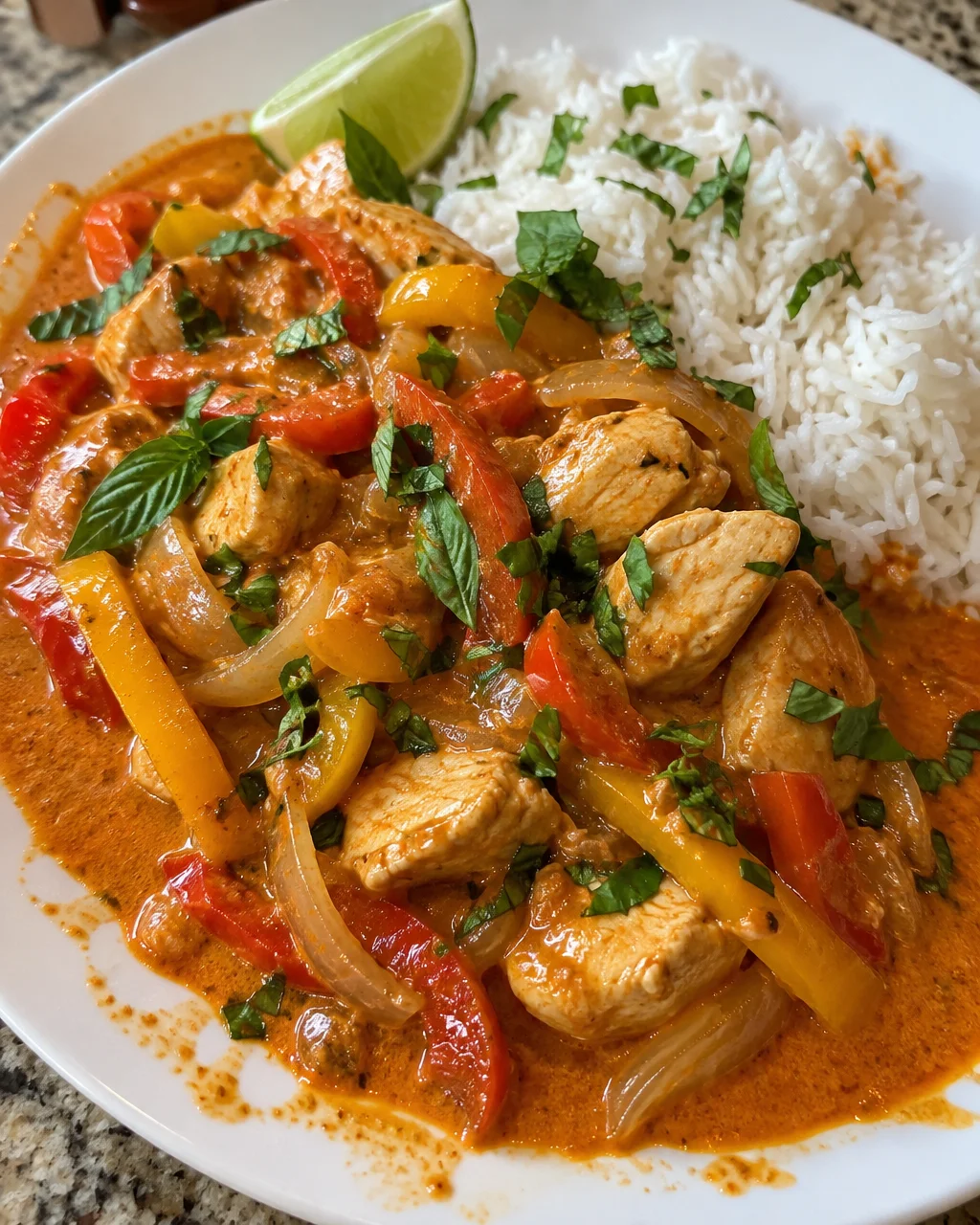
Busy evenings have a way of shrinking your patience for complicated cooking. You want dinner to feel fresh and satisfying, but you also want one pan, familiar ingredients, and minimal cleanup. On colder nights, an equally simple option is this quick five-ingredient potato soup.
Thai Coconut Curry Chicken meets that weeknight need with tender chicken, colorful bell peppers, and a silky coconut sauce. Red curry paste supplies aromatic chile flavor, while ginger, garlic, fish sauce, soy sauce, and brown sugar create a savory-sweet balance. A squeeze of lime brightens the entire skillet.
The dish takes about 35 minutes from start to finish and is especially comforting spooned over fluffy jasmine rice. Its curry flavor is noticeable without being overwhelmingly hot, and you can make simple adjustments for different spice preferences. Below, you will find the complete ingredient list, clear cooking directions, serving ideas, and practical tips for getting the sauce just right.
Kitchen Essentials You’ll Need
A large skillet, saucepan, cutting board, chef’s knife, and wooden spoon are the main tools you need for this recipe.
Choose a deep 12-inch skillet or wok so the chicken can brown without crowding and the coconut curry sauce has room to simmer. A medium saucepan with a tight-fitting lid works well for cooking 1½ cups of jasmine rice.
Use a stable cutting board and sharp chef’s knife to cut the chicken into evenly sized pieces and slice the vegetables. Similar-sized pieces cook at roughly the same rate, which prevents dry chicken and undercooked vegetables.
A wooden spoon or heat-safe silicone spatula helps scrape flavorful browned bits from the skillet. Measuring spoons and dry and liquid measuring cups are also helpful because the balance of curry paste, fish sauce, soy sauce, sugar, and lime juice shapes the finished sauce.
Why You’ll Love This Recipe
This recipe delivers bold curry flavor, simple preparation, family-friendly flexibility, and a complete dinner in about 35 minutes.
Fragrant, balanced flavor: Thai Coconut Curry Chicken combines creamy coconut milk with savory fish sauce, salty soy sauce, warm ginger, garlic, and mildly spicy red curry paste. Brown sugar softens the sharper edges, while fresh lime keeps the sauce from tasting heavy.
Straightforward cooking: Everything except the rice comes together in one skillet. You brown the chicken, briefly cook the vegetables and aromatics, then simmer them in the sauce. Each stage provides an easy visual cue, so beginners do not need complicated techniques.
Easy to adapt for your family: One tablespoon of red curry paste produces a moderate curry flavor, although brands vary in heat. Adults can add chile flakes at the table, while children may appreciate extra rice and a lighter spoonful of sauce.
Practical for weeknights: Chicken breast cooks quickly, bell peppers require little preparation, and canned coconut milk creates an instant sauce. Leftovers also reheat well for lunch. When you want another comforting family meal with a different flavor profile, rich and creamy cheesy mashed potatoes make a satisfying foundation for roasted chicken or vegetables.
Thai Coconut Curry Chicken Ingredients
The complete recipe uses chicken, vegetables, aromatics, coconut milk, seasonings, lime, herbs, and jasmine rice to make four generous servings.
- 1½ cups uncooked jasmine rice
- 2¼ cups water
- 1 lb boneless, skinless chicken breasts, cut into 1-inch pieces
- ½ tsp kosher salt
- ¼ tsp ground black pepper
- 1 tbsp vegetable oil
- 1 small yellow onion, thinly sliced
- 1 medium red bell pepper, thinly sliced
- 1 medium yellow bell pepper, thinly sliced
- 2 cloves garlic, minced
- 1 tbsp peeled and minced fresh ginger
- 1 tbsp Thai red curry paste
- 1 can (13.5 to 14 oz) full-fat unsweetened coconut milk
- 1 tbsp fish sauce
- 1 tbsp low-sodium soy sauce
- 1 tbsp packed light brown sugar
- 1 tbsp fresh lime juice
- ¼ cup loosely packed fresh basil leaves or cilantro leaves, torn if large
- 1 medium lime, cut into 4 wedges
Full-fat coconut milk gives the curry its smooth body and mellow richness. Shake or stir the can before measuring so the coconut cream and liquid are evenly combined. Avoid sweetened coconut cream, which is intended for drinks and desserts.
Thai red curry paste contains concentrated chiles, aromatics, and spices. Heat varies considerably among brands, so one tablespoon is a sensible starting point. Fish sauce contributes deep savory flavor rather than an obviously fishy taste, while low-sodium soy sauce reinforces the seasoning.
The lime appears in two forms for a reason. Juice stirred into the finished sauce adds acidity throughout the dish, while wedges let each person brighten an individual serving. Jasmine rice absorbs the coconut curry and turns the skillet into a complete meal.
How to Make Thai Coconut Curry Chicken Step by Step
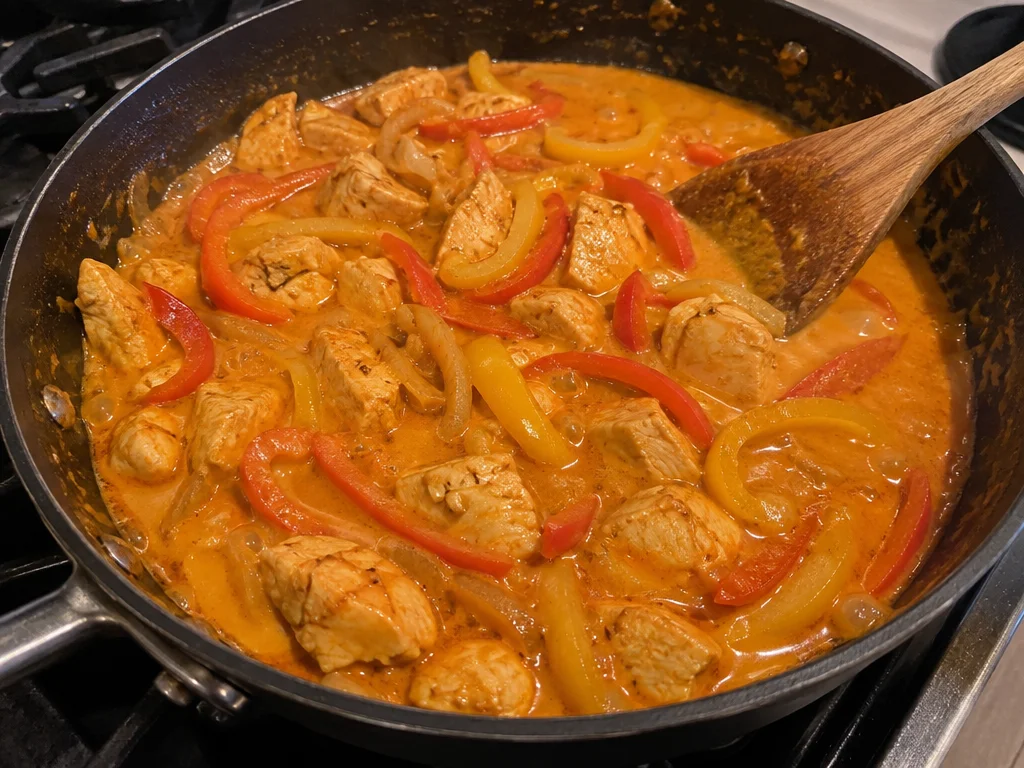
Thai Coconut Curry Chicken takes about 15 minutes to prepare and 20 minutes to cook, using beginner-friendly stovetop techniques.
Cook the jasmine rice. Place the rice in a fine-mesh strainer and rinse under cool water until the runoff is mostly clear. Add the rice and 2¼ cups water to a medium saucepan. Bring to a boil over medium-high heat, then cover, reduce the heat to low, and cook for 12 minutes. Remove it from the heat and let it stand, covered, for 5 minutes.
Season the chicken. While the rice cooks, pat the chicken pieces dry with paper towels. Sprinkle them evenly with the kosher salt and black pepper. Dry surfaces help the chicken brown instead of steam.
Brown the chicken. Heat the vegetable oil in a deep 12-inch skillet over medium-high heat. Add the chicken in a single layer. Cook for 5 to 7 minutes, turning occasionally, until lightly browned and nearly cooked through. Transfer it to a clean plate.
Cook the vegetables. Reduce the heat to medium. Add the sliced onion, red bell pepper, and yellow bell pepper to the same skillet. Cook for 3 to 4 minutes, stirring often, until the onion begins to soften but the peppers retain a little firmness.
Add the aromatics and curry paste. Stir in the garlic and ginger and cook for 30 seconds. Add the red curry paste and continue stirring for another 30 seconds, coating the vegetables and gently frying the paste to release its aroma.
Build the coconut curry sauce. Pour in the coconut milk, then stir in the fish sauce, soy sauce, and brown sugar. Scrape the bottom of the pan to loosen any browned bits. Bring the mixture to a gentle simmer over medium heat, not a vigorous boil.
Finish cooking the chicken. Return the chicken and its accumulated juices to the skillet. Simmer uncovered for 5 to 7 minutes, stirring occasionally, until the sauce lightly coats a spoon and the chicken reaches 165°F in the thickest pieces.
Brighten and serve. Remove the skillet from the heat and stir in the tablespoon of lime juice. Fluff the rice with a fork. Divide it among four bowls, spoon over the curry, and garnish with the basil or cilantro. Serve each portion with one lime wedge.
Fun Variations You Can Try
These optional variations let you adjust the protein, vegetables, heat, or serving base without changing the core cooking method.
For a richer chicken variation, replace the chicken breast with 1 lb boneless, skinless chicken thighs. Cut them into 1-inch pieces and brown them for 6 to 8 minutes. They remain particularly juicy during simmering.
To add more vegetables, stir in 1 cup trimmed snap peas during the final 4 minutes. You could instead add 2 cups baby spinach during the last minute, folding it into the sauce until wilted. These are optional additions and are not required for the main recipe.
For a vegetarian variation, replace the chicken with 14 oz extra-firm tofu. Press it well, cube it, and brown it in the oil before cooking the vegetables. Check your curry paste label because certain Thai varieties contain shrimp. Replace the fish sauce with an equal amount of additional soy sauce.
A milder curry can be made with 2 tsp red curry paste rather than 1 tbsp. For a hotter version, add ¼ tsp crushed red pepper with the curry paste.
If you enjoy building meals around griddled bread, these authentic Irish potato farls offer a useful technique for turning mashed potatoes into a savory side, although jasmine rice remains the traditional pairing for this curry.
How I Love to Serve It
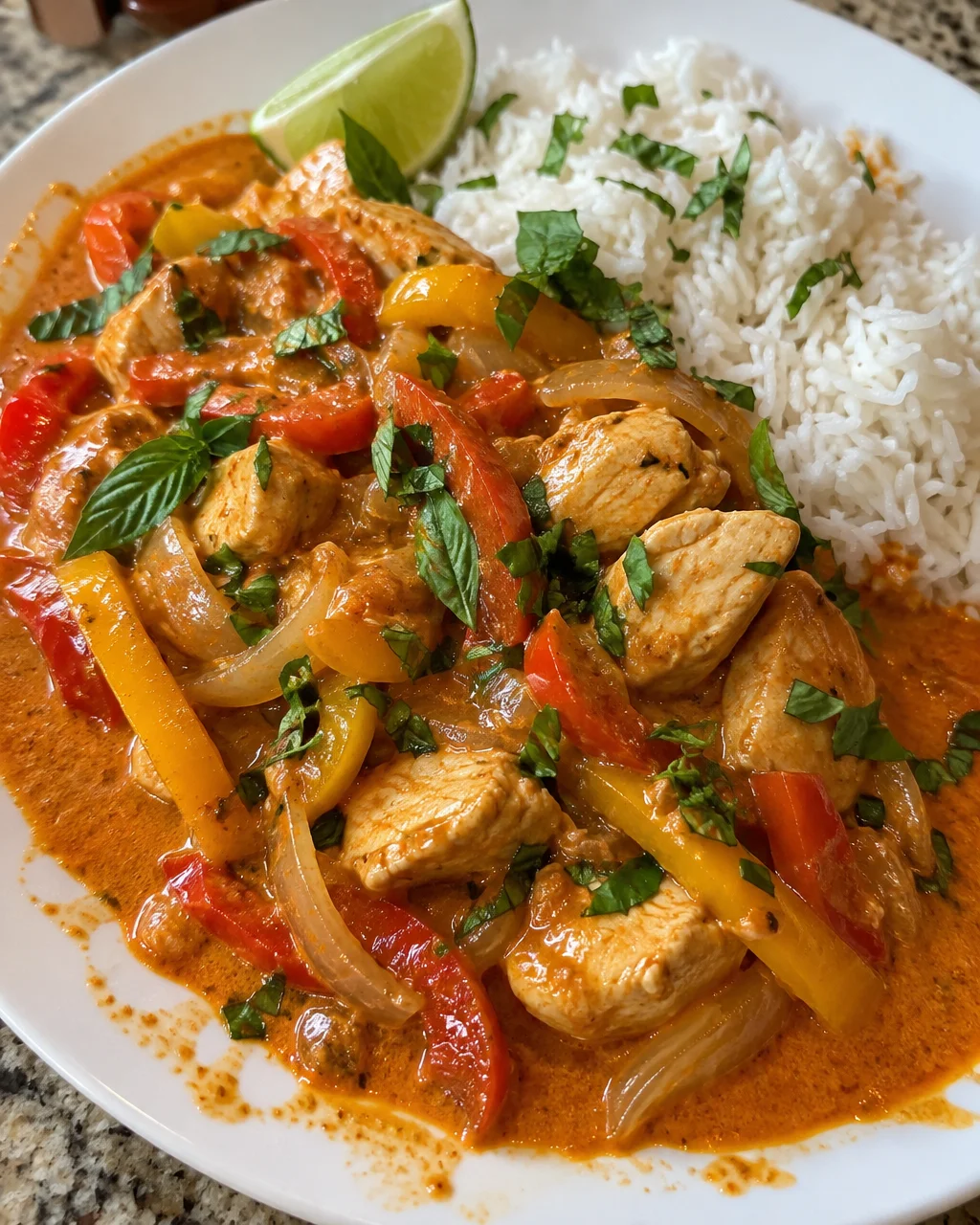
This coconut curry is best served in shallow bowls over hot jasmine rice with fresh herbs and a lime wedge.
Spoon the rice slightly off-center, then ladle the chicken, peppers, and plenty of coconut sauce around it. Finish with torn basil for a sweet, peppery aroma or cilantro for a brighter herbal note. A lime wedge on the side lets everyone control the acidity.
A crisp cucumber salad is an excellent contrast to the warm sauce. Toss sliced cucumber and shredded carrots with rice vinegar and a pinch of sugar for a cool, crunchy side. Steamed green beans, roasted broccoli, or a simple cabbage slaw also add color without competing with the curry.
For a larger family meal, serve vegetable spring rolls or fresh summer rolls before the main course. Keep their dipping sauce light because the curry already supplies plenty of savory flavor.
Cold sparkling water with lime is an easy drink pairing. Unsweetened iced green tea complements the ginger and herbs, while chilled coconut water emphasizes the tropical character without adding alcohol. For children who find the curry warm, cold milk or a fruit smoothie can soften the sensation of chile heat.
Helpful Tips from My Kitchen
The best results come from dry chicken, controlled heat, briefly fried curry paste, and a final adjustment of lime and seasoning.
First, cut the chicken into consistent 1-inch pieces. Small scraps cook faster than larger cubes and may become dry before the center of the bigger pieces is done. Patting the meat dry also helps produce golden edges.
Avoid crowding a small skillet. If you do not have a 12-inch pan, brown the chicken in two batches, dividing the tablespoon of oil between them. Crowding traps steam and prevents the flavorful browning that forms on the skillet’s surface.
Cook the red curry paste for about 30 seconds before adding coconut milk. This short contact with the hot pan wakes up its aromatic ingredients, but do not leave it unattended because garlic and curry paste can scorch quickly.
Keep the coconut sauce at a gentle simmer. Hard boiling may reduce the sauce too quickly and can make the chicken tough. If it becomes thicker than you prefer, stir in 1 tablespoon of water at a time.
Finally, add lime juice after removing the pan from the heat. Fresh acidity can become dull with prolonged cooking. If your finished curry seems flat, another squeeze from the serving wedge often helps more than extra salt.
Important Cooking Reminders
Safe handling, moderate simmering, prompt storage, and gentle reheating keep the chicken curry flavorful and suitable for leftovers.
Cook chicken to a minimum internal temperature of 165°F, measuring the thickest piece with an instant-read thermometer. For official guidance, consult the [External Link: USDA safe minimum cooking temperatures, fsis.usda.gov].
Use separate surfaces or thoroughly wash the knife and cutting board after they touch raw chicken. Never return cooked chicken to the unwashed plate that held it raw.
Refrigerate leftover curry and rice in separate airtight containers within 2 hours. Keep them refrigerated for up to 3 days.
Freeze cooled curry without rice for up to 2 months. Coconut sauce may look slightly separated after thawing, but gentle stirring usually restores it.
Reheat curry in a covered skillet over medium-low heat for 5 to 8 minutes, stirring occasionally, until it reaches 165°F. Microwave individual portions in short intervals and stir between each interval.
Do not boil the sauce aggressively or overcook the peppers. A gentle simmer preserves tender chicken and lightly crisp vegetables.
Nutritional Information (Estimated)
Each of the four servings contains approximately 700 calories, 78 grams of carbohydrates, 37 grams of protein, and 28 grams of fat, including the jasmine rice, full-fat coconut milk, chicken, vegetables, oil, sauce ingredients, herbs, and lime.
These figures are estimates rather than laboratory-verified values. Actual nutrition will vary with the coconut milk brand, the amount of sauce left in the skillet, ingredient sizes, and the exact quantity placed in each bowl. Reduced-fat coconut milk lowers the calorie and fat content but produces a thinner, less creamy curry.
Recipe Details
- Prep Time: 15 minutes
- Cook Time: 20 minutes
- Total Time: 35 minutes
- Yield: 4 servings
Common Questions About Thai Coconut Curry Chicken
Thai Coconut Curry Chicken can be prepared ahead, adjusted with practical substitutions, and reheated successfully when the curry and rice are stored separately.
Can I make Thai coconut curry chicken ahead of time?
Yes. Prepare the curry through the final simmer, cool it promptly, and refrigerate it in an airtight container for up to 3 days. For the freshest flavor, wait to add the lime juice and herbs until after reheating. Cook the rice on serving day or refrigerate it separately. Warm the curry gently to 165°F so the chicken does not become tough.
What can I substitute for fish sauce?
Use 2 tsp additional low-sodium soy sauce plus 1 tsp fresh lime juice in place of the tablespoon of fish sauce. The result will lack a little of fish sauce’s distinctive savory depth, but it will remain balanced. Check the red curry paste label if you need the entire dish to be fish-free because certain brands include shrimp or other seafood ingredients.
Can I double this coconut curry chicken recipe?
Yes, but use a large Dutch oven or brown 2 lb chicken in multiple batches so the pieces sear rather than steam. Double all remaining ingredients and cook 3 cups of jasmine rice in 4½ cups water. The sauce may need 2 to 4 additional minutes to reach a gentle simmer, but the chicken must still reach 165°F without prolonged cooking.
Conclusion
Thai Coconut Curry Chicken offers a satisfying balance of creamy sauce, tender meat, lightly crisp vegetables, and fragrant seasonings in one manageable meal.
The coconut milk softens the chile warmth without hiding the character of the red curry paste. Ginger and garlic add aromatic depth, fish sauce and soy sauce build savoriness, and brown sugar rounds out their salty edges. That final splash of lime makes the finished skillet taste lively rather than overly rich.
This is also the kind of dinner that fits real kitchen rhythms. The rice cooks while you prepare the chicken and vegetables, and the skillet sauce comes together quickly once everything is chopped. While the curry simmers, you have enough time to set out bowls, rinse the cutting board, or clear away the ingredients before dinner reaches the table.
Even better, the recipe gives you useful visual cues at every stage. Look for lightly browned chicken, softened onion, peppers that still hold their color, and a sauce that coats the back of a spoon. An instant-read thermometer removes uncertainty from checking the meat.
Serve it simply over jasmine rice or add a crisp cucumber salad when you want more freshness. Fresh basil or cilantro makes each bowl look inviting, but the lime wedge is the finishing touch that brings all the flavors into focus.
When you need a colorful family dinner that tastes layered without requiring hours at the stove, give this recipe a try. A warm bowl of coconut curry can make an ordinary weeknight meal feel wonderfully complete.
Schema hint: Recipe name: Thai Coconut Curry Chicken; category: Main Course; cuisine: Thai-inspired; prep time: 15 minutes; cook time: 20 minutes; total time: 35 minutes; yield: 4 servings; estimated calories: 700 per serving.
Print
Thai Coconut Curry Chicken
- Total Time: 35 minutes
- Yield: 4 servings 1x
- Diet: None
Description
A comforting one-pan dish featuring tender chicken, colorful bell peppers, and a savory coconut curry sauce.
Ingredients
- 1 ½ cups uncooked jasmine rice
- 2 ¼ cups water
- 1 lb boneless, skinless chicken breasts, cut into 1-inch pieces
- ½ tsp kosher salt
- ¼ tsp ground black pepper
- 1 tbsp vegetable oil
- 1 small yellow onion, thinly sliced
- 1 medium red bell pepper, thinly sliced
- 1 medium yellow bell pepper, thinly sliced
- 2 cloves garlic, minced
- 1 tbsp peeled and minced fresh ginger
- 1 tbsp Thai red curry paste
- 1 can (13.5 to 14 oz) full-fat unsweetened coconut milk
- 1 tbsp fish sauce
- 1 tbsp low-sodium soy sauce
- 1 tbsp packed light brown sugar
- 1 tbsp fresh lime juice
- ¼ cup loosely packed fresh basil leaves or cilantro leaves, torn if large
- 1 medium lime, cut into 4 wedges
Instructions
- Cook the jasmine rice. Rinse rice under cool water, then combine with 2 ¼ cups water in a saucepan, bring to boil, cover, reduce heat and cook for 12 minutes. Let stand covered for 5 minutes.
- Season the chicken with kosher salt and black pepper.
- Brown the chicken in heated oil over medium-high heat for 5 to 7 minutes, then transfer to a plate.
- Cook the vegetables in the same skillet for 3 to 4 minutes until softened.
- Add garlic and ginger, cooking for 30 seconds, then stir in red curry paste.
- Pour in coconut milk and add fish sauce, soy sauce, and brown sugar. Simmer gently.
- Finish cooking the chicken in the sauce for 5 to 7 minutes until fully cooked and coated.
- Brighten the dish with lime juice before serving over rice, garnished with basil or cilantro and lime wedges.
Notes
Use full-fat coconut milk for richness. Adjust curry paste to taste for spiciness.
- Prep Time: 15 minutes
- Cook Time: 20 minutes
- Category: Main Course
- Method: Stovetop
- Cuisine: Thai
Nutrition
- Serving Size: 1 serving
- Calories: 700
- Sugar: 8g
- Sodium: 900mg
- Fat: 28g
- Saturated Fat: 14g
- Unsaturated Fat: 10g
- Trans Fat: 0g
- Carbohydrates: 78g
- Fiber: 3g
- Protein: 37g
- Cholesterol: 100mg
Keywords: curry, chicken, Thai, coconut milk, quick meal