
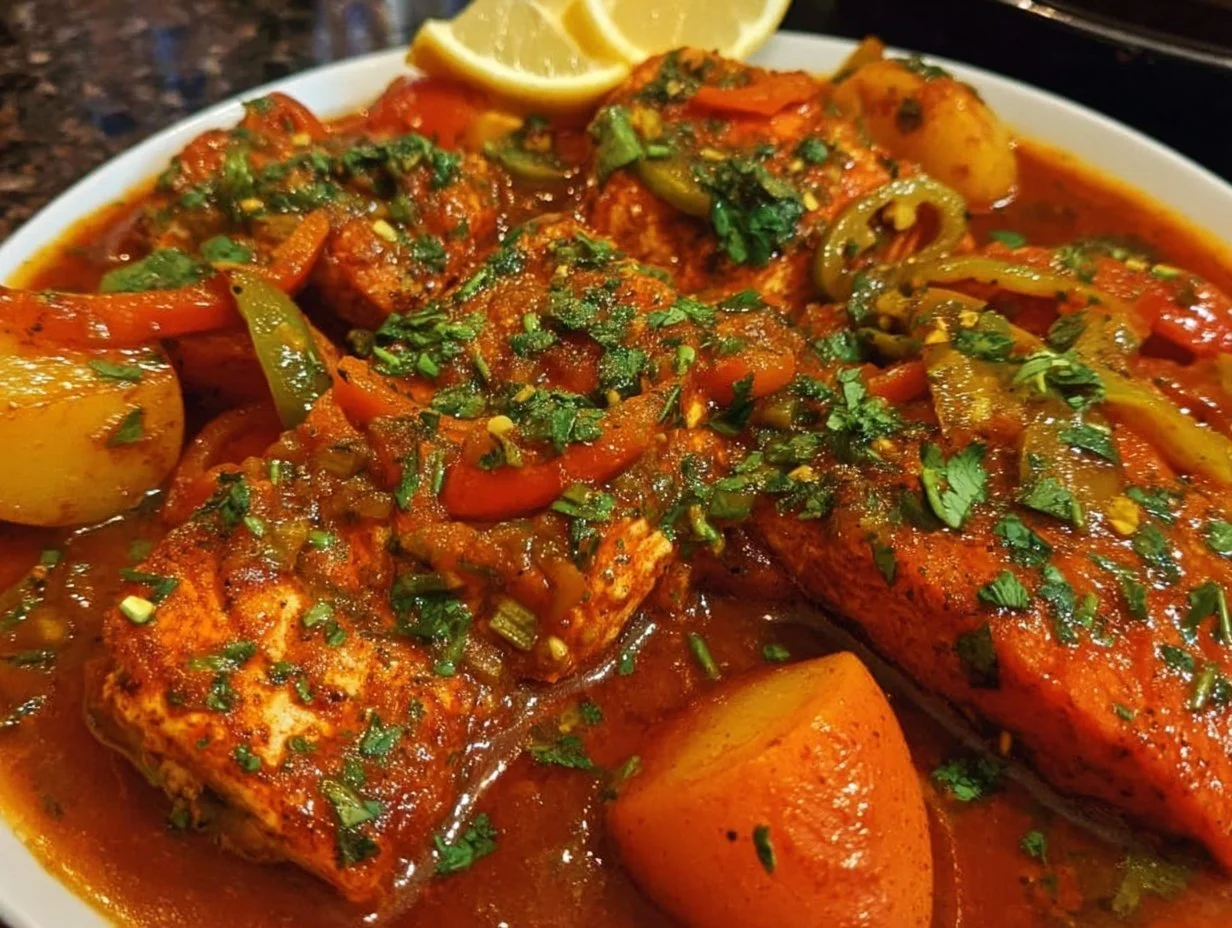
On some afternoons the smell of garlic and smoked paprika is all it takes to lift my spirits. I remember making this dish on a rainy Sunday when I wanted something comforting but bright, something that would fill the house with warmth and make everyone gather around the table. Classic Spicy Moroccan Fish in Rich Sauce landed in my kitchen the way good recipes do: a little improvised, a lot of heart, and an insistence that simple ingredients deserve bold treatment. The tomatoes and spices simmer down into a fragrant, silky sauce that clings to the fish, while the peppers and carrots soften just enough to offer gentle crunch. It feels like a hug in a bowl and it is unexpectedly easy to pull together on a weeknight. If you love colors on the plate and complex flavor without fuss, this one will become a weeknight favorite.
Kitchen Essentials You’ll Need
Good tools make this recipe calm and joyful. You do not need fancy equipment, just a few reliable pieces that keep the cooking smooth and the sauce luscious. A wide, heavy sauté pan helps the fish cook evenly and gives the vegetables space to soften properly. A sharp knife makes quick work of the cilantro, peppers, and carrots. A wooden spoon is kind to nonstick finishes and perfect for coaxing the tomato paste into the spices. If you have a splatter screen, it helps keep the stove tidy when simmering the sauce. Below is a short checklist to keep things organized.
- Wide heavy sauté pan with a lid
- Sharp chef’s knife and cutting board
- Wooden spoon or silicone spatula
- Measuring cups and spoons
- Citrus juicer or fork for squeezing lemon
Why You’ll Love This Classic Spicy Moroccan Fish in Rich Sauce
This dish hits a comforting trifecta: warmth, brightness, and a satisfying sauce that begs to be mopped up. The spices sweet paprika, a touch of hot paprika, cumin, and turmeric create a layered aroma that is earthy, slightly smoky, and just peppery enough to make your nose tingle. The texture play is delightful: flaky salmon (or another white fish) sits in a silky, tomato-tinged bath while bell pepper strips and carrots soften but keep a bite. Every spoonful is both cozy and alive.
Emotionally, it feels like family food. The sauce is generous and saucy, so it naturally encourages sharing and lingering conversation over bowls. It’s practical too. This recipe is forgiving with the fish you choose and generous enough to feed a small crowd. Key reasons to make it:
- Deep, fragrant sauce that doesn’t require hours of simmering
- Flexible with fish choice and easily doubled for guests
- Balanced heat that you can nudge up or down
- Beautiful to look at with bright cilantro and lemon finishing
You’ll enjoy how the kitchen fills with scent as it cooks, and how the final plate feels both special and comfortingly simple.
Classic Spicy Moroccan Fish in Rich Sauce Ingredients
1 pound/450g salmon fillets (feel free to use any fish you prefer), ⅓ cup olive oil, 1 red bell pepper (sliced into strips), 1 serrano pepper (or 2 jalapeno peppers, sliced into strips), ½ cup chopped cilantro, 2 carrots (peeled and cut into strips), 1 russet potato (peeled and cut into 1” slices (optional)), 6 garlic cloves (peeled and halved), 1 tablespoon tomato paste, ¾ to 1 cup water, 1 tablespoon sweet paprika, ½ tablespoon hot paprika (adjust to taste), 1 teaspoon coarse salt, ½ teaspoon cumin, ¼ teaspoon turmeric
I like to keep a few pantry extras close by: a pinch of black pepper, a squeeze of fresh lemon for finishing, and a little extra olive oil if needed. If you prefer a richer pan, a tablespoon of butter at the end rounds the sauce beautifully. The potato is optional but it adds heft if you want something starchy in the pan to soak up the sauce. Use fresh cilantro for the best bright finish.
Step-by-Step Instructions
- Heat a large sauté pan over medium heat and coat the bottom with the olive oil. The oil should shimmer but not smoke. Add the red bell pepper, serrano or jalapeno strips, carrot strips, potato slices if using, and the halved garlic cloves. Sauté for 2 to 3 minutes until the garlic starts to blush and the peppers begin to soften and turn glossy.
- Sprinkle in the sweet paprika, hot paprika, coarse salt, cumin, and turmeric. Add the tablespoon of tomato paste directly to the pan. Stir constantly so the tomato paste loosens and the spices toast in the oil. Cook for an additional 2 to 3 minutes until the mixture smells aromatic and the tomato paste deepens in color.
- Add half of the chopped cilantro and around ¾ cup of water to the pan. Stir everything together, scraping any caramelized bits from the bottom. Cover the pan and lower the heat to a gentle simmer. Cook for 12 to 15 minutes, until the vegetables are tender but still hold a little structure and the potato slices are easily pierced with a fork.
- Give the sauce a careful taste and adjust the seasoning. Add more coarse salt if it feels flat. If you want an extra kick, add a pinch more hot paprika or a sprinkle of red pepper flakes. Lightly season the fish fillets with salt on both sides. Nestle them into the pan so they sit at least ¾ of the way into the sauce, with some sauce coating the tops.
- If the pan looks dry, add another ¼ cup of water to reach a saucy consistency. Spoon the sauce over each fillet once to coat them. Scatter the remaining cilantro over the fish and cover the pan. Cook on a low flame for 20 to 25 minutes. Halfway through, gently spoon the sauce over each fillet so the tops stay flavorful and moist. The fish is done when it flakes easily and looks opaque through and through.
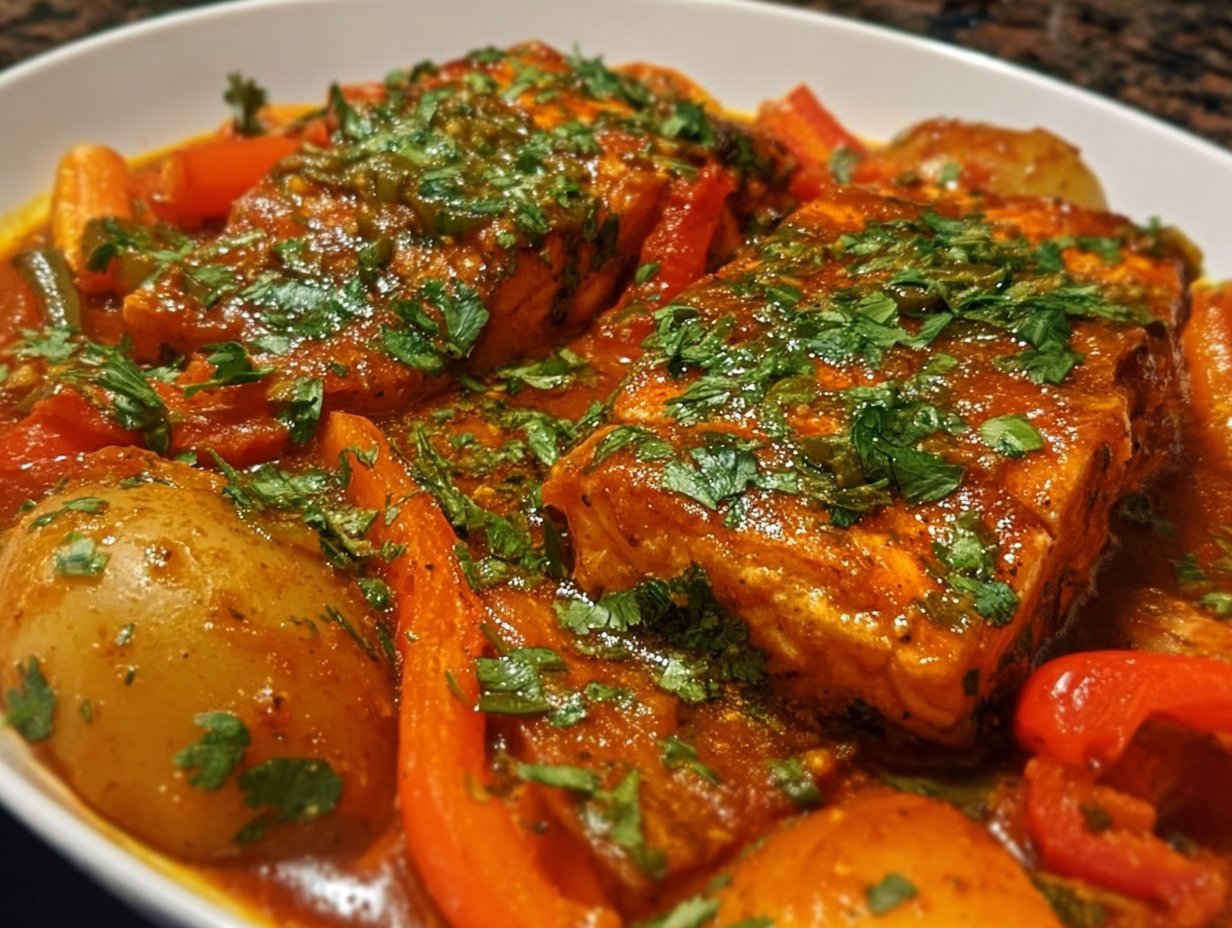
- Just before serving, tuck lemon slices around the fish and squeeze fresh lemon juice over the top for a bright lift. Serve hot and enjoy the melody of spices, tender vegetables, and flaky fish.
Fun Variations You Can Try
There are so many ways to make this recipe your own. Try different fishes, alter the heat, or make it heartier. A few ideas to inspire you:
- Use firm white fish: swap salmon for cod, halibut, or snapper for a milder flavor and more delicate flake.
- Make it vegetarian: replace fish with firm tofu or chickpeas and simmer until the tofu is infused with spice.
- Add olives or preserved lemons: fold in chopped green olives or a few strips of preserved lemon for a briny, Moroccan touch.
- Change the heat profile: use smoked paprika only for a deeper flavor, or add extra serrano for a spicier punch.
- Make it coconut-rich: stir in ¼ to ½ cup coconut milk at the end for a creamier, slightly sweet sauce that mellows the heat.
- Sheet-pan version: roast the vegetables until tender, then nestle fish fillets on top and finish under the broiler for a hands-off method.
Play with herbs and garnishes. Fresh mint or parsley can be lovely with cilantro, and toasted pine nuts or slivered almonds add a pleasant crunch.
How I Love to Serve It
This is a cozy, communal dish that begs for simple, comforting sides. I usually serve it family-style in the pan so the sauce stays warm and everyone can help themselves. A bowl of steaming couscous or fluffy rice is my go-to for mopping up the sauce. Crusty bread also works beautifully if you want something rustic.
- For a lighter plate, pair with a crisp green salad dressed in lemon and olive oil.
- Add a side of roasted eggplant or simple steamed greens to balance the spice.
- For brunch-style meals, serve alongside warm flatbreads and a bowl of yogurt for cooling contrast.
When plating, spoon a generous portion of sauce first, lay the fish gently on top, and tuck colorful peppers and carrots around the fillet. Finish with extra cilantro and a lemon wedge. The atmosphere I aim for is casual and warm, with easy conversation and a sense that this is exactly the kind of food that brings people together.
Helpful Tips from My Kitchen
Small habits make the cooking more relaxed and the flavors better. Prep as much as you can before you start. Slice the peppers, peel the garlic, and measure the spices so the stove-side work is easy. Taste early and often. Adjusting salt and heat in stages prevents the sauce from becoming flat or too spicy.
- Use a heavy pan so the sauce heats evenly and doesn’t scorch.
- Toast the spices briefly in oil with the tomato paste to bloom their flavors.
- If the sauce reduces too far, add small amounts of water rather than one big splash to keep control over consistency.
- Keep fish at room temperature for 15 minutes before cooking so it cooks through evenly.
- When spooning sauce over fish, be gentle to preserve the fillets’ shape.
- If you prefer a silkier sauce, use the back of the spoon to break down a few pieces of potato and stir them in to thicken naturally.
Trust your senses. Smell the spices, watch the color of the tomato paste, and check vegetables for tenderness. Small adjustments yield a dish that feels homemade and confident.
Important Cooking Reminders
- Always check fish doneness: it should flake easily and be opaque in the center to ensure safe cooking.
- Cool and refrigerate leftovers within two hours. Store in an airtight container up to 3 days.
- Reheat gently on the stove over low heat with a splash of water to refresh the sauce. Microwaving is convenient but may dry the fish.
- Avoid overcrowding the pan at the start; vegetables need room to sauté and develop flavor.
- Use a lid to maintain gentle simmering and ensure vegetables and fish cook through evenly.
- If using potatoes, par-cook slices in boiling water for 4–5 minutes to speed overall cook time and guarantee tenderness.
Nutritional Information (Estimated)
Per serving this dish is moderate in calories and rich in protein and healthy fats from the salmon and olive oil. A rough estimate per serving (based on four servings) is around 380 to 480 calories depending on fish choice and whether you include the potato. Carbohydrates are primarily from carrots, potato, and peppers. The dish is a good source of omega-3 fatty acids and vitamins A and C from the vegetables. If you need precise numbers for health reasons, weigh your final portions and use a nutrition calculator.
- Calories: ~380–480 per serving
- Carbs: moderate, depending on potato/couscous sides
- Fat: mainly from olive oil and fish (healthy fats)
- Protein: high, owing to the salmon or other fish
Recipe Details
- Prep Time: 15–20 minutes
- Cook Time: 35–45 minutes
- Total Time: 50–65 minutes
- Yield: Serves 3–4
Common Questions You Might Have
What fish works best if I do not like salmon?
Cod, halibut, snapper, or sea bass are excellent alternatives. They absorb the sauce beautifully and offer a milder flavor. If you choose a lean fish like cod, watch cooking time carefully so it doesn’t dry out. Firm, thicker fillets are easiest to handle in this saucy method.
Can I make this ahead of time?
Yes, you can make the sauce and vegetables up to a day ahead. Store them chilled and gently reheat in a sauté pan before adding the fish. Add the fish toward the end so it cooks just until flaky. This method keeps the fish tender and the sauce bright. If reheating the full dish, warm slowly and add a splash of water or broth to loosen the sauce.
How spicy is this and how can I adjust the heat?
The recipe balances sweet and hot paprikas for depth with a gentle heat level. Adjust easily by:
- Using fewer hot paprika or omitting serrano/ jalapeno for mild flavor.
- Adding more hot paprika, a chopped hot pepper, or red pepper flakes for bigger heat.
- Serving with cool yogurt, which mellows the spice for sensitive eaters.
Conclusion — Classic Spicy Moroccan Fish in Rich Sauce
I always leave the stove with a satisfied smile after making this dish. It is one of those recipes that feels celebratory and everyday at once. The way the sauce clings to the fish and the bright sting of fresh lemon at the end turns a simple dinner into a memorable meal. If you love fragrant spices and comforting saucy dishes, this will likely be added to your rotation. For more inspiration and variations that echo this dish’s soul, I enjoy reading how other cooks approach Moroccan fish on sites like Moroccan Fish – Something Nutritious and exploring different stew-style takes at Spicy Moroccan Fish Stew Recipe. Try it on a slow Sunday or a busy Wednesday; either way, let the kitchen fill with aroma and the table with good conversation.