
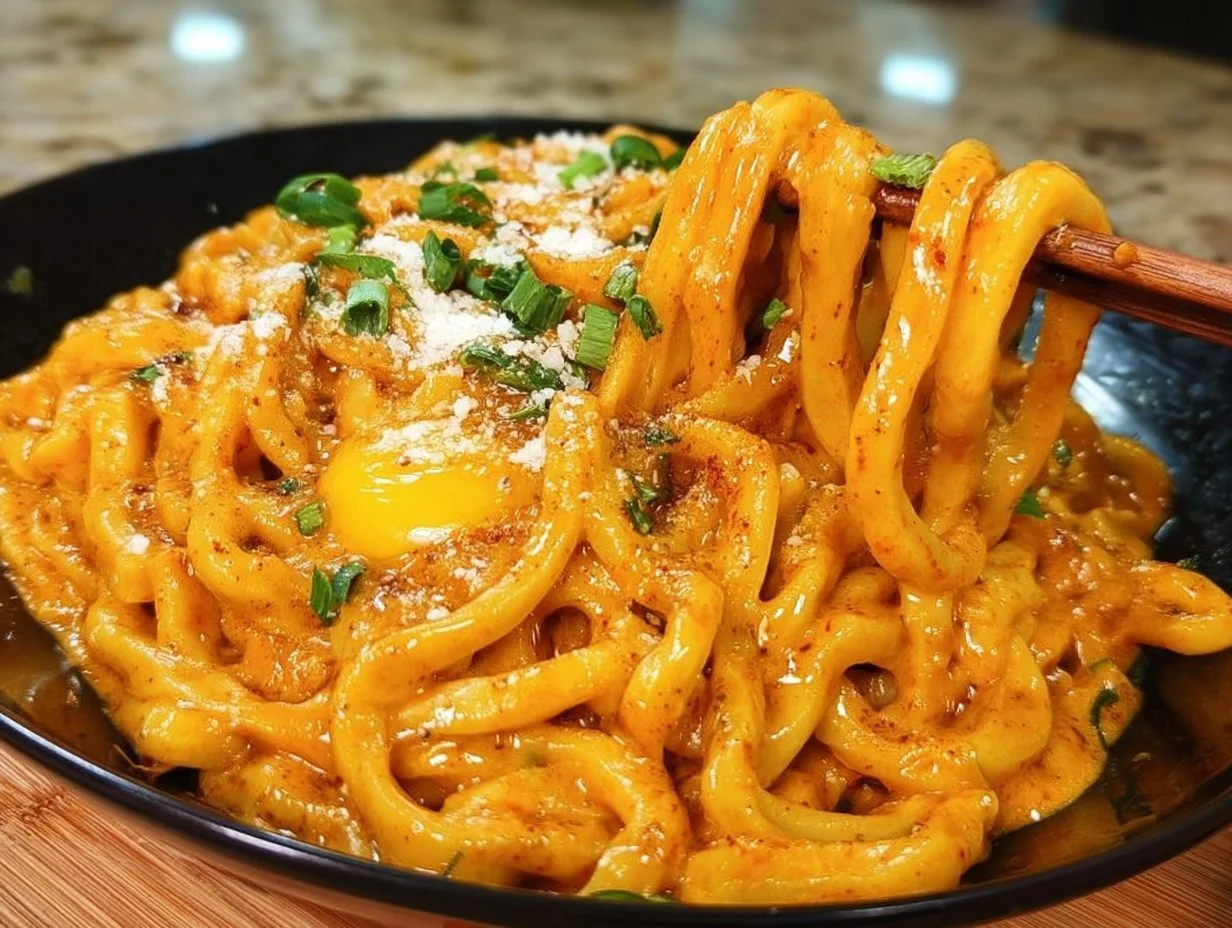
I remember the first time I wanted something spicy, silky, and downright comforting at the same time. The kind of meal that warms your hands and clears your head after a long day. In that little kitchen moment I learned how to make a sauce that hugs udon like an old friend, and that simple discovery became a go-to for busy weeknights. Creamy Gochujang Udon Noodles landed in my rotation because it hits that cozy spot between familiar and exciting, and I love sharing how easy it is to make.
If you love quick dinners that feel a little indulgent, this will be one of those recipes you tuck into your regular menu. It’s also a great companion to other pantry-based comfort meals like Creamy Velveeta Beef Pasta Bowtie Noodles, which I reach for on extra lazy Sundays. I’ll walk you through each step with tips and sensory cues so you can make this confidently, even if you’re new to gochujang or udon. Let’s get cozy and make a bowl that feels like a hug.
Kitchen Essentials You’ll Need for Creamy Gochujang Udon Noodles
Before you start, gather a few tools so the cooking flows smoothly. A heavy-bottomed skillet helps the sauce emulsify without burning. A large pot is essential for boiling the frozen udon, and a fine mesh strainer or colander makes draining easy. A sturdy wooden spoon or heatproof spatula is helpful for tossing noodles without tearing them. A small bowl for measuring and whisking the sauce ingredients keeps things tidy.
- Large pot for boiling noodles
- Heavy skillet (10–12 inches)
- Fine mesh strainer or colander
- Tongs or a heatproof spatula
- Measuring spoons and cups
- Small bowl and whisk
These items keep the process calm and rewarding. A good skillet gives you even heat for sautéing the shallots and garlic until translucent. Tongs are perfect for coating the udon in sauce without clumping. Trust me, having the right little arsenal makes a weeknight feel professional and relaxed.
Why You’ll Love This Creamy Gochujang Udon Noodles
This recipe is comfort personified. The sauce is silky from the cream and butter, tangy and savory from the soy, and playful with a spicy, fermented warmth from gochujang. The udon noodles are thick and pillowy, which means every bite has body and chew. It’s the kind of dish you can eat straight from the skillet or plate up for company and still feel like you made something special with minimal fuss.
- Rich and creamy texture that clings to every strand of udon.
- Balanced heat that lingers without overpowering.
- Fast prep using two pack frozen udon noodles for convenience.
- Versatile enough to dress up with an egg yolk or keep simple with parmesan.
I love how the flavors evolve as the dish sits for a minute. The gochujang deepens and the cream mellows the spice into a gentle, enveloping heat. The aroma of butter, garlic, and caramelizing shallots fills the kitchen quickly. If you crave an approachable Asian-inspired pasta vibe, this recipe is your warm, comforting answer.
Creamy Gochujang Udon Noodles Ingredients
For this recipe you’ll need the ingredients listed below. I keep the pantry additions simple so the bold gochujang flavor remains front and center.
2 pack frozen udon noodles, 3 tbsp butter (unsalted), 3 cloves garlic, minced, 2 shallots, chopped, 1 1/2 tbsp gochujang, 1/2 cup heavy cream, 1/2 cup reserved noodle water, 2 tsp soy sauce, 1 tsp gochugaru, 1 green onion, chopped (for garnish), Grated parmesan cheese, Egg yolk (optional)
Pantry staples you might add:
- Salt and freshly ground black pepper to taste
- A splash of neutral oil if your skillet is not nonstick
- Optional: a small pinch of sugar if your gochujang is especially tangy
Notes: keep your reserved noodle water measured at 1/2 cup before draining the udon. That starchy water is a secret weapon for silky emulsification. If you can’t find gochugaru, a mild chili flake works in a pinch but will change the texture and heat profile slightly.
Step-by-Step Instructions
- Bring a large pot of salted water to a rolling boil. Add the frozen udon noodles and cook according to package instructions. Watch for them to loosen and float; that’s when they’re done. Use a measuring cup to lift out and reserve 1/2 cup of the starchy noodle water. Then drain and quickly rinse the noodles under warm water to stop any excess cooking and to keep them from becoming gluey.
- In a large skillet over medium heat, melt the butter until it foams and smells nutty. Add the minced garlic and chopped shallots. Sauté for 2 to 3 minutes, stirring regularly, until the shallots turn translucent and the garlic gives off a warm, toasty aroma. You should see the shallots soften without browning.
- Stir in the gochujang and let it cook with the aromatics for about 30 seconds. The paste will loosen and become fragrant. You’ll notice the skillet take on a deeper, glossy red hue as the gochujang warms and integrates with the butter.
- Gradually pour in the heavy cream while stirring so the paste disperses evenly. Add the reserved 1/2 cup of noodle water a little at a time, whisking or stirring to create a smooth sauce. Add the 2 tsp soy sauce and 1 tsp gochugaru. Let the mixture simmer gently for a few minutes until the sauce slightly thickens and coats the back of your spoon. Taste and adjust with a pinch of salt or a few turns of black pepper.
- Add the cooked udon to the skillet. Toss gently but thoroughly with tongs so each noodle picks up a glossy coating of sauce. You’re looking for an even sheen and no dry streaks. If the sauce seems too thick, stir in a splash more reserved noodle water until you reach a silky consistency.
- Serve immediately in warm bowls. Top with grated parmesan cheese and the chopped green onion for brightness. If you like extra richness, nestle an Egg yolk (optional) into the center and let it mingle with the hot noodles. Enjoy the contrast of creamy sauce, springy udon, and bright scallion crunch.
Fun Variations You Can Try
- Vegetables: Toss in quick-sauteed mushrooms, baby spinach, or shredded carrots for color and texture. Add vegetables after step 2 so they have time to soften.
- Protein add-ins: Pan-seared chicken, thinly sliced beef, or pan-fried tofu make this a heartier meal. Brown protein separately and fold it in at the end.
- Dairy-free: Swap heavy cream for canned coconut milk thinned with a bit of vegetable broth. Use vegan butter to match richness.
- Extra umami: Stir in a teaspoon of miso paste with the cream for a savory depth. Add a drizzle of toasted sesame oil at the end.
- Heat control: Reduce gochujang to 1 tbsp for milder flavor. Increase gochugaru or add a sprinkle of chili oil for more heat.
- Cheesy twist: If you want an indulgent twist reminiscent of Western comfort food, stir in a tablespoon of cream cheese as the sauce simmers for extra silkiness.
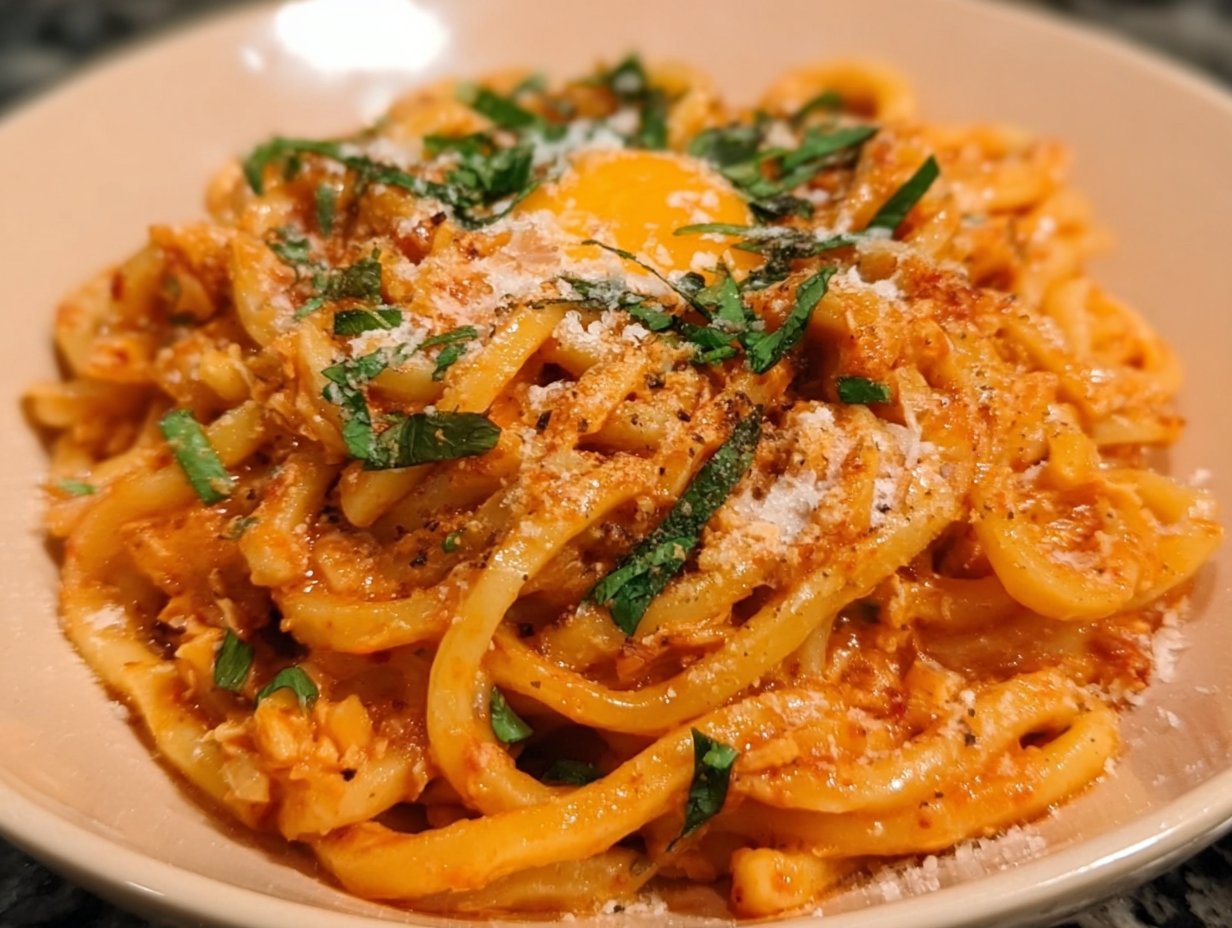
- Egg variations: Instead of an egg yolk, poach an egg and let it break over the noodles for a runny, luscious finish.
These swaps let you pivot the dish for different diets and moods without losing the soul of the recipe.
How I Love to Serve It
This dish shines when presented simply and warmly. I like to bowl it into wide, shallow dishes so there’s a generous surface area for garnishes. The parmesan melts into the hot sauce and gives a slightly savory finish that contrasts the fermented chili notes. A simple scattering of chopped green onion adds a crisp, peppery bite.
Pair with:
- A crisp cucumber salad dressed with rice vinegar to cut through the richness.
- Quick pickled radishes for acid and crunch.
- A side of steamed edamame or roasted broccolini for green balance.
At home, I light a candle and serve this on an ordinary weeknight to make dinner feel a little special. The textures are key: the slick sauce, the chewy udon, the crunchy scallion, and the optional silky egg yolk. For casual entertaining, set out bowls of extra green onion, chili flakes, and grated parmesan so guests can customize their bowls.
Helpful Tips from My Kitchen
Start with good heat control. Medium heat for sautéing keeps the garlic from burning and the shallots from becoming bitter. When you add the gochujang, give it only a short cook time to release aromas without scorching.
- Taste as you go. Gochujang varies in saltiness and sweetness, so adjust soy sauce and a pinch of sugar if needed.
- Use the reserved noodle water. That starchy liquid is what turns the sauce from oily to silky.
- Keep a spatula nearby for gentle tossing. Udon are thick and benefit from a careful hand.
- If your sauce separates, lower the heat and whisk in a little more noodle water slowly until it comes back together.
If you like a creamier result, reduce the reserved noodle water slightly and add an extra tablespoon of butter at the end. For quicker cleanup, use a large nonstick skillet and wipe it out right after serving; the sauce loosens easily with warm soapy water. And don’t be afraid to adapt. I often make a double batch of sauce to coat roasted vegetables the next day.
Important Cooking Reminders
- Always reserve the 1/2 cup of noodle water before draining; it is essential for emulsifying the sauce.
- Reheating: Warm gently on the stovetop with a splash of water or cream to loosen the sauce. Avoid microwaving at full power to prevent separation.
- Storage: Keep leftovers in an airtight container in the fridge for up to 3 days. Store sauce and noodles together for best flavor, but add a tablespoon of water before reheating.
- Common mistakes to avoid:
- Burning the garlic by using too high heat.
- Adding the noodle water all at once; add gradually to control texture.
- Overcooking frozen udon; follow package timing and rinse to stop cooking.
Nutritional Information (Estimated)
A generous bowl of Creamy Gochujang Udon Noodles is satisfying and moderately rich. Per serving (assuming 2–3 servings total), estimate about 600–800 calories depending on toppings like parmesan and an egg yolk. Carbohydrates come primarily from the udon noodles and are substantial, making this a filling meal. Fat comes from the butter and heavy cream, so reducing those will lower calorie density. Protein is modest from dairy and optional egg or added protein like tofu or chicken.
- Calories: ~650 per serving (estimate)
- Carbs: ~70–90 g
- Fat: ~30–40 g
- Protein: ~12–20 g
Adjust portions and add a lean protein or extra vegetables to balance the meal if desired.
Recipe Details
- Prep Time: 10 minutes
- Cook Time: 15 minutes
- Total Time: 25 minutes
- Yield: 2–3 servings
Common Questions You Might Have
Can I use fresh udon instead of 2 pack frozen udon noodles?
Yes. Fresh udon will work beautifully. Reduce cooking time according to the package, often just a quick warm through. Because fresh noodles are less starchy than frozen, you may need a little less reserved noodle water or an extra splash to reach the right silkiness. Handle fresh udon gently to avoid tearing.
Is gochujang very spicy and can I substitute it?
Gochujang brings heat, sweetness, and umami, but its spice level can vary by brand. If you prefer milder heat, use 1 tbsp and supplement with a teaspoon of tomato paste for color and body. For a substitute, a blend of miso and a small amount of chili paste approximates the fermented depth, but it won’t be identical.
How do I prevent the sauce from separating when reheating leftovers?
Reheat slowly over low heat on the stovetop with a tablespoon or two of water or cream. Stir gently and heat until just warmed through. If the sauce looks grainy, add a splash more reserved noodle water and whisk to bring it back together. Avoid high heat or rapid microwaving, which can cause separation.
Conclusion
When I make Creamy Gochujang Udon Noodles, I’m always thinking about comfort, adaptability, and the little rituals that turn a hurried evening into something cozy. The garlic and shallots sing as they soften. The gochujang gives a hum of fermented heat that mellows into cream. The udon hold the sauce like old friends holding hands. It’s a recipe that invites improvisation whether you’re adding mushrooms, searing tofu, or simply topping the bowl with a raw egg yolk for silkiness.
This dish is proof that bold flavors and simple techniques can create a weeknight dinner that feels lovingly indulgent. If you’re feeding a family or cooking for one, it’s forgiving and quick. I hope when you make it, you’ll pause at the steam rising from the bowl and enjoy that small, everyday comfort that food can bring. Keep the pantry stocked, the skillet ready, and don’t be afraid to make this recipe your own. Creamy Gochujang Udon Noodles will be there to greet you whenever you need a warm, spicy, creamy hug.
Print
Creamy Gochujang Udon Noodles
- Total Time: 25 minutes
- Yield: 2-3 servings 1x
- Diet: Vegetarian
Description
A comforting and flavorful bowl of udon noodles coated in a creamy gochujang sauce, perfect for busy weeknights.
Ingredients
- 2 packs frozen udon noodles
- 3 tbsp unsalted butter
- 3 cloves garlic, minced
- 2 shallots, chopped
- 1 1/2 tbsp gochujang
- 1/2 cup heavy cream
- 1/2 cup reserved noodle water
- 2 tsp soy sauce
- 1 tsp gochugaru
- 1 green onion, chopped (for garnish)
- Grated parmesan cheese (for serving)
- Egg yolk (optional)
- Salt and freshly ground black pepper to taste
- A splash of neutral oil (if your skillet is not nonstick)
- A small pinch of sugar (if your gochujang is tangy)
Instructions
- Bring a large pot of salted water to a rolling boil. Add the frozen udon noodles and cook according to package instructions. Reserve 1/2 cup of noodle water before draining and rinse noodles under warm water.
- In a skillet over medium heat, melt butter until foamy. Add garlic and shallots, sauté for 2-3 minutes until translucent.
- Stir in gochujang and cook for 30 seconds. Gradually add heavy cream and reserved noodle water, whisking to create a smooth sauce.
- Add soy sauce and gochugaru, simmer until sauce thickens.
- Toss the cooked udon in the sauce until evenly coated. Serve immediately topped with parmesan cheese and garnish with green onion. Optionally add an egg yolk.
Notes
Reserve 1/2 cup of noodle water for emulsification. Adjust seasoning to taste as gochujang can vary in flavor.
- Prep Time: 10 minutes
- Cook Time: 15 minutes
- Category: Main Course
- Method: Baking
- Cuisine: Asian
Nutrition
- Serving Size: 1 serving
- Calories: 650
- Sugar: 4g
- Sodium: 900mg
- Fat: 35g
- Saturated Fat: 20g
- Unsaturated Fat: 10g
- Trans Fat: 0g
- Carbohydrates: 70g
- Fiber: 3g
- Protein: 15g
- Cholesterol: 100mg
Keywords: udon, gochujang, creamy noodles, quick dinner, comfort food