
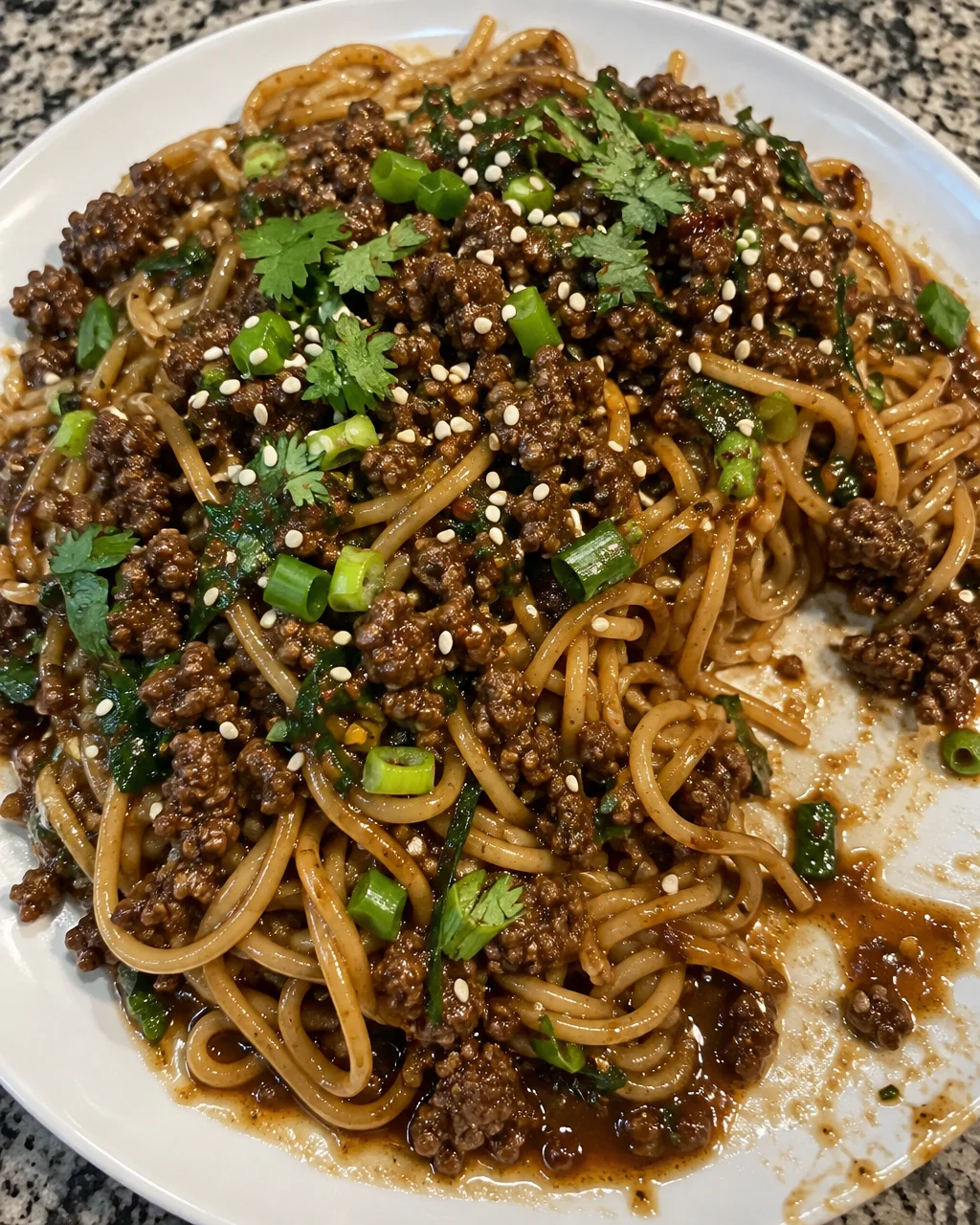
Busy evenings have a way of making takeout tempting, especially when everyone is hungry and the sink already holds a few dishes. A dependable skillet dinner can change the whole mood because it puts a satisfying meal on the table without creating a major cleanup project.
Mongolian Ground Beef and Noodles delivers that kind of weeknight ease. Tender noodles and browned beef are coated in a glossy sauce that balances savory soy sauce, caramel-like brown sugar, hoisin, ginger, and garlic. If cozy beef dinners are always popular at your table, this slow cooker beef and noodle casserole is another practical option for your meal plan.
This skillet meal has enough sweetness to appeal to kids, while green onions, sesame oil, and optional red pepper flakes give it depth for adults. The cornstarch-thickened sauce clings to every strand instead of pooling at the bottom. Below, you’ll learn how to build the sauce, avoid sticky noodles, and bring the complete dinner together in about 30 minutes.
Kitchen Essentials You’ll Need
A large skillet or wok, pasta pot, colander, mixing bowl, whisk, and sturdy spatula are the main tools needed for this recipe. Choose a 12-inch skillet or roomy wok so the beef can brown properly and the noodles have enough space to be tossed without spilling.
Use a 4-quart or larger pot to cook the noodles. A colander allows you to drain them quickly before they become too soft. A medium mixing bowl and small whisk make it easy to dissolve the brown sugar and combine the sauce ingredients evenly.
Keep a heat-safe spatula or wooden spoon nearby for breaking the ground beef into small pieces. A liquid measuring cup is also helpful for the broth and soy sauce, while measuring spoons ensure that stronger flavors such as sesame oil and ginger stay balanced.
Why You’ll Love This Recipe
Mongolian Ground Beef and Noodles is a fast, flavorful skillet dinner made from familiar ingredients and designed for busy family nights.
Big flavor: Soy sauce, brown sugar, hoisin, sesame oil, fresh ginger, and garlic create a shiny sauce with sweet, savory, and aromatic notes. Red pepper flakes add gentle warmth without overwhelming the other flavors.
Straightforward preparation: The noodles cook separately while the beef browns, and the sauce comes together in one bowl. Once those components are ready, everything needs only a few minutes in the skillet.
Family-friendly appeal: Ground beef is easy to eat, and the sauce coats the noodles evenly. You can omit the pepper flakes for sensitive eaters and place extra heat on the table for everyone else.
Practical pantry cooking: Spaghetti works just as well as lo mein noodles, so you do not need to make a special shopping trip. The recipe also uses one pound of beef to make four generous servings.
The finished noodles are tender but not mushy, while the beef provides savory richness in every forkful. For a creamier spin on the ground-beef-and-pasta combination, save this Cajun ground beef linguine with creamy garlic Alfredo for another dinner.
Mongolian Ground Beef and Noodles Ingredients
The complete recipe uses ground beef, noodles, aromatics, and a balanced soy-hoisin sauce to make four main-course servings.
- 8 oz dry spaghetti or lo mein noodles
- 1 lb 85% lean ground beef
- 1 tbsp sesame oil
- 1 tbsp fresh ginger, minced
- 2 cloves garlic, minced
- 1/2 tsp crushed red pepper flakes, optional
- 1/4 cup reduced-sodium soy sauce
- 1/4 cup packed light brown sugar
- 1 tbsp hoisin sauce
- 1/2 cup low-sodium beef broth
- 1 tbsp cornstarch
- 2 tbsp cold water
- 1 cup chopped green onions, divided
- 1 tbsp sesame seeds
- 1/4 cup chopped fresh cilantro, optional
Reduced-sodium soy sauce and low-sodium broth prevent the finished sauce from becoming overly salty. Brown sugar contributes the characteristic sweetness, while hoisin adds body and a subtle fermented savoriness. Using regular soy sauce is possible, but the flavor will be saltier.
Fresh ginger and garlic provide the aromatic backbone, so mince them finely for even distribution. Sesame oil has a bold, toasted flavor and serves as both the cooking fat and a major seasoning. Keep the skillet at medium-high heat rather than letting the oil smoke.
Cornstarch mixed with cold water creates a smooth slurry that thickens the sauce quickly. Green onions add freshness and mild bite, while sesame seeds and cilantro provide texture, color, and a fresh finish.
How to Make Mongolian Ground Beef and Noodles Step by Step
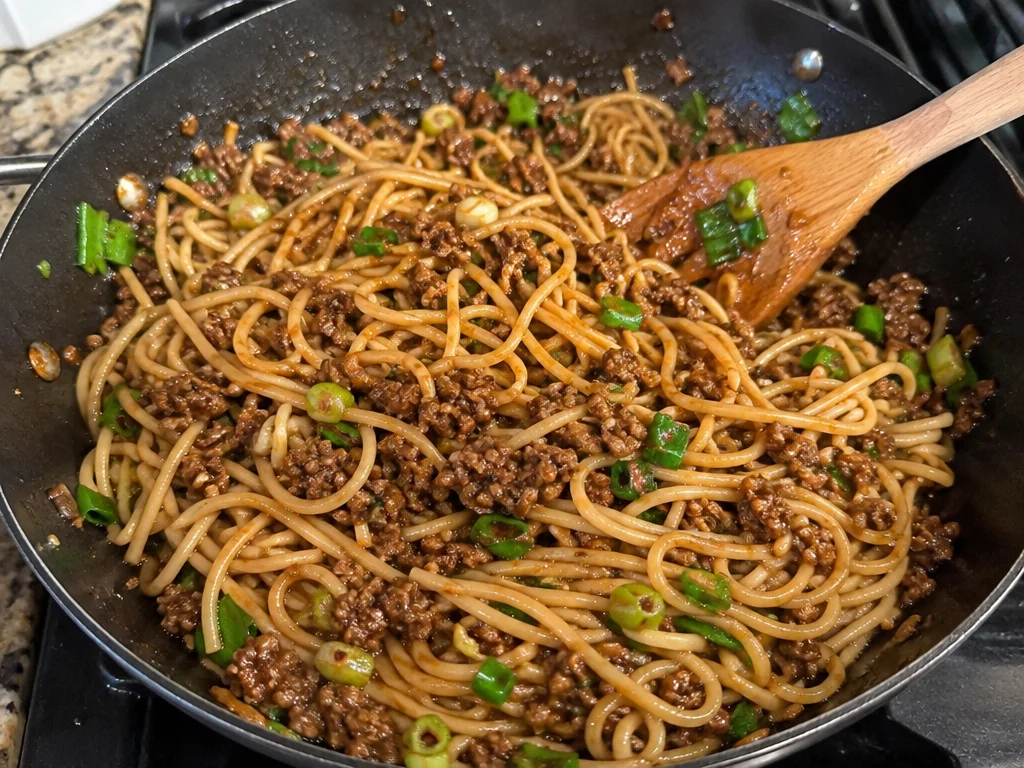
Mongolian Ground Beef and Noodles takes about 15 minutes to prepare and 15 minutes to cook, and the process is manageable for beginner cooks.
Prepare the sauce. In a medium bowl, whisk together the reduced-sodium soy sauce, brown sugar, hoisin sauce, and beef broth. Continue whisking until most of the sugar dissolves, then set the mixture aside.
Make the slurry. In a separate small bowl, stir the cornstarch with 2 tablespoons cold water until completely smooth. Keep it nearby, but do not add it to the sauce yet.
Cook the noodles. Bring a large pot of water to a boil. Add the spaghetti or lo mein noodles and cook according to the package directions until just al dente, usually 7 to 10 minutes. Drain thoroughly in a colander and set aside. Do not rinse unless the package specifically recommends it.
Brown the beef. While the noodles cook, heat the sesame oil in a 12-inch skillet or wok over medium-high heat. Add the ground beef and spread it over the hot surface. Cook for 6 to 8 minutes, breaking it into small crumbles, until no pink remains and the meat reaches 160°F. Carefully drain excess rendered fat if needed.
Add the aromatics. Stir the minced ginger, garlic, and optional crushed red pepper flakes into the beef. Cook for 1 to 2 minutes, stirring frequently, until fragrant. Avoid letting the garlic darken.
Simmer the sauce. Pour the prepared soy sauce mixture into the skillet. Stir well, scraping up any browned bits, and bring it to a gentle simmer over medium heat.
Thicken it. Stir the cornstarch slurry again, then slowly pour it into the simmering sauce while stirring continuously. Cook for 2 to 3 minutes, until the sauce looks glossy and lightly coats the spatula.
Combine everything. Add the drained noodles and 3/4 cup chopped green onions. Toss with tongs or two spoons for 1 to 2 minutes, until the noodles are evenly coated and heated through.
Finish and serve. Divide among four bowls. Garnish each serving with the remaining 1/4 cup green onions, sesame seeds, and optional chopped cilantro. Serve immediately while the sauce is glossy and warm.
Fun Variations You Can Try
Easy variations include changing the protein, adding vegetables, adjusting the heat, or using a different noodle without altering the core cooking method.
For a lighter version, replace the ground beef with one pound of ground turkey. Turkey is leaner, so monitor it closely and stop cooking once it reaches 165°F to prevent dryness. Ground chicken also works with the same safe internal temperature.
Add up to 2 cups of thinly sliced vegetables for more color and texture. Bell peppers, broccoli florets, shredded carrots, mushrooms, or snap peas are good choices. Sauté firm vegetables for 3 to 4 minutes before browning the beef, transfer them to a plate, and return them when you add the noodles.
For extra heat, increase the crushed red pepper flakes to 1 teaspoon. A teaspoon of chili-garlic sauce can also be stirred into individual portions, though it is an optional variation rather than part of the base recipe.
Rice noodles can replace spaghetti or lo mein noodles. Prepare them according to their package directions and handle them gently because they tend to break more easily. For another distinctly seasoned pasta option, this cheesy bowtie pasta with Cajun ground beef pairs a creamy sauce with a bolder spice profile.
How I Love to Serve It
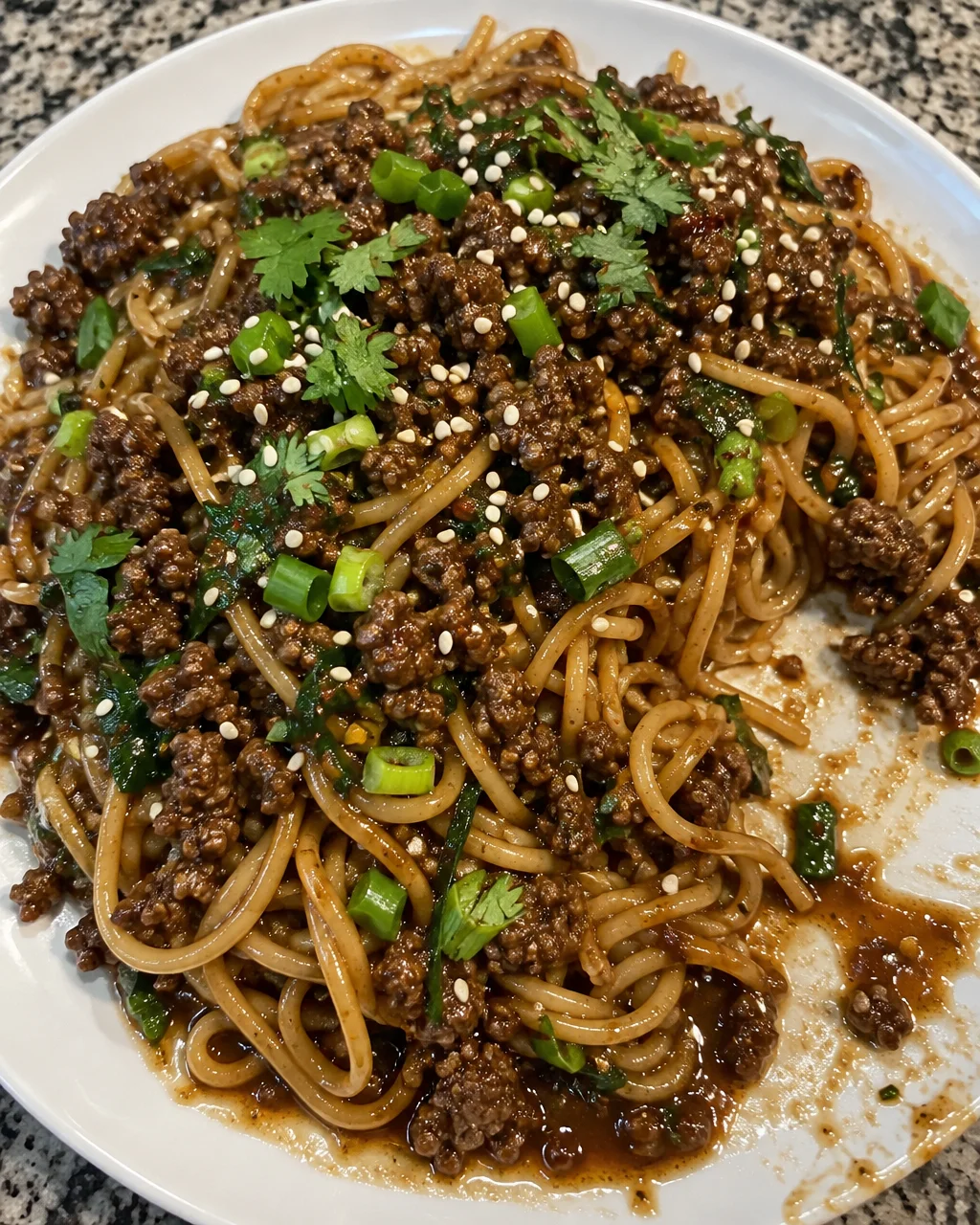
The best way to serve this noodle dish is hot in shallow bowls, finished with green onions, sesame seeds, and cilantro for contrast.
Use tongs to twist the noodles into each bowl, then spoon the saucy ground beef over the top. This simple plating method distributes the meat evenly and keeps the garnishes visible. A few extra sliced green onions add crispness against the tender noodles.
Steamed broccoli is an easy side because its mild flavor balances the sweet sauce. Roasted green beans, sesame cucumber salad, or lightly sautéed bok choy also complement the Asian-inspired seasonings without making dinner feel heavy. For a larger gathering, vegetable spring rolls provide a crisp contrast.
A cold glass of unsweetened iced tea works well with the salty-sweet sauce. Sparkling water with lime is another refreshing option, particularly when using the red pepper flakes. Children may prefer cold milk or a lightly sweetened fruit tea.
Since the recipe already combines protein and noodles, you do not need several side dishes. One crisp or green vegetable is usually enough to turn it into a complete family meal.
Helpful Tips from My Kitchen
The most useful tips are to prepare the sauce first, undercook the noodles slightly, brown the beef in a wide pan, and add the slurry only after the sauce simmers.
First, measure and mix the sauce before heating the skillet. Ginger and garlic cook quickly, so having the liquid ready prevents them from scorching while you search for ingredients.
Cook the noodles only until al dente. They soften a little more when tossed through the hot sauce, and fully cooked noodles can become overly soft. Drain them well because extra pasta water may dilute the glaze.
Give the ground beef enough contact with the skillet. Stirring constantly can make it steam instead of brown. Let it sit for 30 to 60 seconds between stirs, and drain excessive fat before adding the aromatics so the sauce does not become greasy.
Always remix the cornstarch slurry immediately before using it because cornstarch settles rapidly. Pour it into simmering liquid while stirring, then allow it to cook for at least 2 minutes.
Finally, assess the sauce only after it coats the noodles. If it seems too thick, stir in 1 tablespoon of water. When using full-sodium soy sauce or broth as a variation, reduce one of them to keep the overall flavor balanced.
Important Cooking Reminders
Safe beef handling, correct storage, and gentle reheating help keep this noodle dinner both enjoyable and food-safe.
Cook ground beef to an internal temperature of 160°F, measured in the center of the meat with an instant-read thermometer. For current government guidance, consult the USDA safe minimum internal temperature chart.
Refrigerate leftovers within 2 hours of cooking. Store them in a shallow, airtight container for up to 4 days.
Freeze cooled leftovers in airtight, freezer-safe portions for up to 2 months. The noodles may soften slightly after thawing, but the flavor remains good.
Reheat refrigerated portions in a covered skillet over medium-low heat with 1 tablespoon water per serving. Stir frequently until the center reaches 165°F. Microwave portions loosely covered, stirring at 45-second intervals.
Avoid pouring the cornstarch slurry into sauce that is not simmering. It may remain thin or turn unevenly thick.
Do not overcook the noodles or leave the garlic unattended. Soft noodles can break during tossing, while burned garlic makes the entire sauce bitter.
Nutritional Information (Estimated)
One of four servings contains approximately 610 calories, 75 grams of carbohydrates, 23 grams of fat, and 31 grams of protein. Each serving also provides roughly 4 grams of fiber.
These figures are estimates based on 85% lean ground beef, spaghetti, all sauce ingredients, sesame seeds, cilantro, and the full quantity of sesame oil. Sodium varies significantly by brand, particularly in soy sauce, broth, and hoisin sauce. Garnish amounts and any substitutions will also change the final nutrition.
Recipe Details
- Prep Time: 15 minutes
- Cook Time: 15 minutes
- Total Time: 30 minutes
- Yield: 4 servings
Common Questions About Mongolian Ground Beef and Noodles
These answers explain how to store, substitute, and prepare Mongolian Ground Beef and Noodles ahead without sacrificing the sauce’s texture.
Can I make Mongolian ground beef noodles ahead of time?
You can prepare the sauce up to 3 days ahead and refrigerate it in a sealed container. Chop the green onions and aromatics up to 1 day ahead, storing them separately. For the best noodle texture, cook the beef and noodles shortly before serving. If preparing the full dish ahead, slightly undercook the noodles and reheat gently with a splash of water.
What noodles work best with Mongolian ground beef?
Lo mein noodles provide a pleasantly chewy texture, while spaghetti is convenient and holds the sauce well. Linguine, ramen noodles without the seasoning packet, and rice noodles are suitable substitutions. Cook whichever noodle you choose according to its package instructions, stopping at al dente. Avoid very delicate angel hair because it can become soft or break while being tossed with the thick sauce.
How can I double this recipe for a larger family?
Double every ingredient to make eight servings, but cook the beef in two batches so it browns instead of steaming. Use a large wok or divide the finished components between two 12-inch skillets. Prepare 16 ounces of noodles in a large stockpot. Once the sauce thickens, combine only as much as your pan can hold safely, then toss the remaining batch separately.
Conclusion
Mongolian Ground Beef and Noodles is an approachable 30-minute dinner with tender noodles, savory beef, and a glossy sweet-and-salty sauce.
The recipe uses everyday ground beef in a way that feels more interesting than another plate of burgers or tacos. Soy sauce and beef broth create a deeply savory base, brown sugar adds sweetness, and hoisin rounds everything out. Fresh ginger, garlic, and green onions keep the rich ingredients from tasting flat, while sesame oil brings its unmistakable toasted aroma.
Texture matters just as much as flavor here. Al dente noodles hold up to tossing, finely crumbled beef spreads through the dish, and cornstarch gives the sauce enough body to cling to each strand. The optional cilantro and sesame seeds add a fresh, lightly crisp finish without complicating the meal.
This is also a practical recipe for cooks who prefer flexible ingredients. Spaghetti can stand in for lo mein noodles, the pepper flakes can be adjusted for your household, and one simple vegetable side completes dinner. Better yet, the skillet and pasta pot are the only substantial cookware waiting at the sink afterward.
A sauce can look slightly loose when it first enters the pan, then turn shiny and cohesive within a couple of minutes. Watching that change is a helpful reminder to let the simmer and cornstarch do their work rather than rushing the process. On the next busy evening when you need comfort and convenience in equal measure, give this straightforward noodle dinner a try.
Schema hint: Recipe name: Mongolian Ground Beef and Noodles; category: Main Course; cuisine: Asian-inspired; prep time: 15 minutes; cook time: 15 minutes; total time: 30 minutes; yield: 4 servings; estimated calories: 610 per serving.
Print
Mongolian Ground Beef and Noodles
- Total Time: 30 minutes
- Yield: 4 servings 1x
- Diet: None
Description
A fast, flavorful skillet dinner with tender noodles, savory beef, and a glossy sweet-and-salty sauce, perfect for busy family nights.
Ingredients
- 8 oz dry spaghetti or lo mein noodles
- 1 lb 85% lean ground beef
- 1 tbsp sesame oil
- 1 tbsp fresh ginger, minced
- 2 cloves garlic, minced
- 1/2 tsp crushed red pepper flakes (optional)
- 1/4 cup reduced-sodium soy sauce
- 1/4 cup packed light brown sugar
- 1 tbsp hoisin sauce
- 1/2 cup low-sodium beef broth
- 1 tbsp cornstarch
- 2 tbsp cold water
- 1 cup chopped green onions, divided
- 1 tbsp sesame seeds
- 1/4 cup chopped fresh cilantro (optional)
Instructions
- Prepare the sauce by whisking together the soy sauce, brown sugar, hoisin sauce, and beef broth in a medium bowl until most sugar dissolves; set aside.
- Make the slurry by stirring cornstarch with 2 tablespoons cold water in a separate bowl until smooth; set aside.
- Cook the noodles in boiling water according to package directions until just al dente, usually 7 to 10 minutes; drain and set aside.
- Brown the beef in sesame oil over medium-high heat for 6 to 8 minutes, breaking into small crumbles until no pink remains; drain excess fat if needed.
- Add ginger, garlic, and optional red pepper flakes to the beef; cook for 1 to 2 minutes until fragrant.
- Pour the prepared soy sauce mixture into the skillet, stir, and bring to a gentle simmer.
- Stir the cornstarch slurry into the simmering sauce; cook for 2 to 3 minutes until glossy and thickened.
- Add drained noodles and 3/4 cup green onions; toss to coat noodles evenly and heat through.
- Finish by dividing among bowls and garnishing with remaining green onions, sesame seeds, and optional cilantro.
Notes
For extra heat, increase red pepper flakes. Feel free to substitute ground turkey or chicken for a lighter option.
- Prep Time: 15 minutes
- Cook Time: 15 minutes
- Category: Main Course
- Method: Skillet
- Cuisine: Asian-inspired
Nutrition
- Serving Size: 1 serving
- Calories: 610
- Sugar: 23g
- Sodium: 600mg
- Fat: 23g
- Saturated Fat: 8g
- Unsaturated Fat: 10g
- Trans Fat: 0g
- Carbohydrates: 75g
- Fiber: 4g
- Protein: 31g
- Cholesterol: 70mg
Keywords: Mongolian beef, noodles, quick family dinner, skillet recipe, Asian inspired