
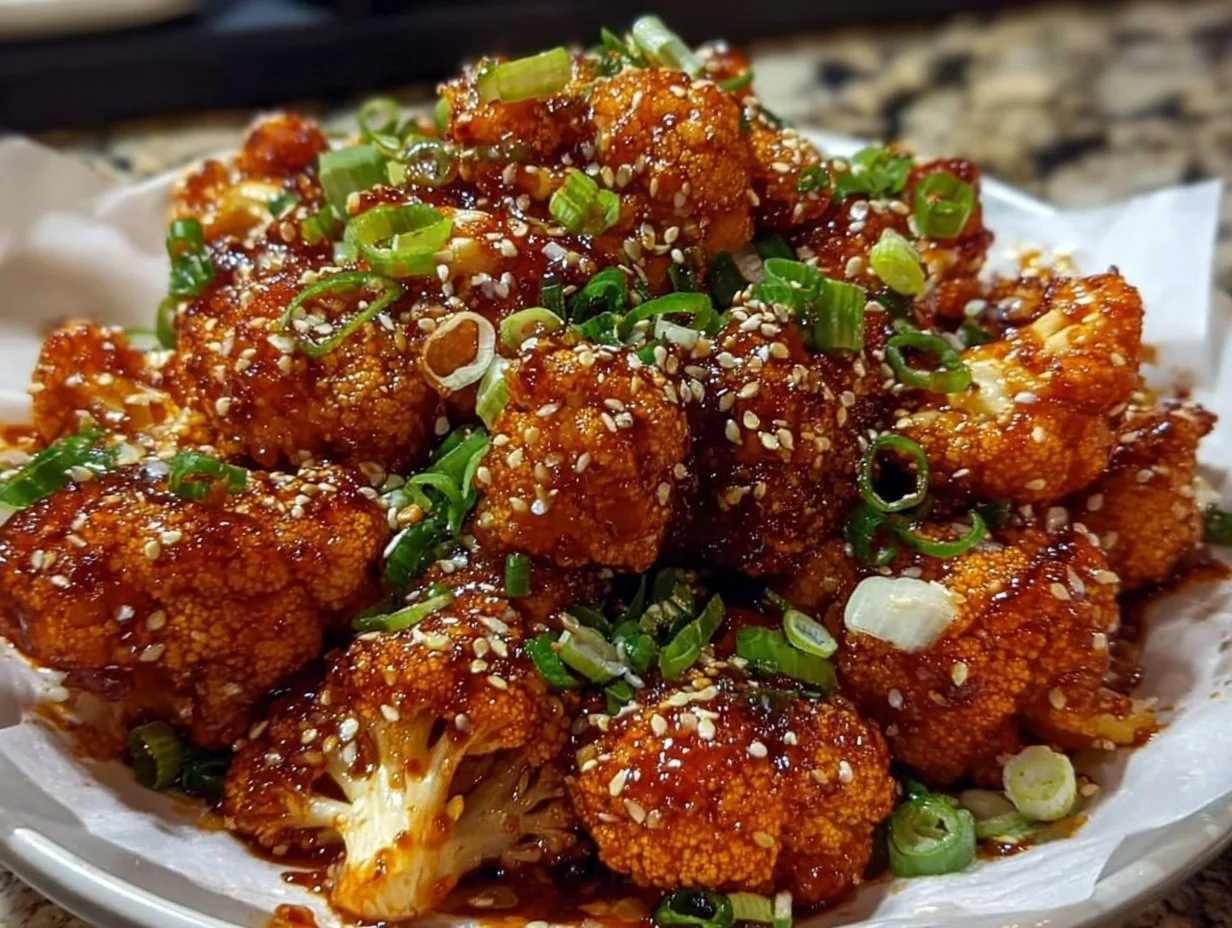
I remember the first time I roasted a head of cauliflower and watched it go from pale and shy to golden and proud in the oven. That soft, slightly sweet scent that shifts to something toasted and nutty always draws people into the kitchen. This recipe is one I make when I want something cozy that still feels a little adventurous.
Korean Baked Cauliflower brings that perfect balance of sweet, spicy, and savory without fuss. I first paired it with a simple pot of slow-cooked beans and the whole house felt like a neighborhood dinner party. If you love bold flavors but crave easy weeknight cooking, you might also enjoy this baked beans recipe that sings with homey comfort. The sauce clings to each floret like a warm blanket, and the toasted sesame and green onion toppings add a little crunch and freshness that make every bite sing.
Kitchen Essentials You’ll Need for Korean Baked Cauliflower
You do not need a fancy arsenal to make this dish. A few reliable tools will get you from raw florets to caramelized, glossy bites. Good tools save time and worry and they give you the confidence to experiment.
- A sturdy baking sheet for even roasting.
- A large mixing bowl for tossing the cauliflower and the sauce.
- A small saucepan if you choose to simmer the sauce.
- A rubber spatula or tongs for gentle tossing.
A rimmed baking sheet keeps the sauce from dripping all over your oven. If your sheet is crowded, the cauliflower will steam instead of roast, so use two sheets if needed. A small whisk makes the sauce silky and helps the gochujang blend smoothly. Trust me, the right pan and a pair of tongs make the whole process feel calmer and more joyful.
Why You’ll Love This Korean Baked Cauliflower
This dish is one of those rare recipes that feels indulgent and homey but comes together without drama. Each roasted floret develops those deep golden edges that taste almost caramelized. Then the sauce adds a layer of savory heat, a hint of sweetness, and a rounded umami that keeps you reaching for one more bite.
You will notice the textures first. The cauliflower becomes tender at the heart while the tips crisp up. The sauce is thick enough to cling yet glossy enough to make the plate look thoughtfully styled. The aroma is a mix of toasted garlic, warm ginger, and that subtle fermented tang from gochujang.
- Comforting and familiar, with a playful Korean twist.
- Quick to assemble for a weeknight dinner.
- Flexible for vegetarians and easy to pair with proteins.
- Great for meal prep as it reheats beautifully.
Korean Baked Cauliflower offers the comfort of roasted vegetables with the thrill of bold, layered flavors. It is the kind of recipe that turns a simple side into the main event when friends stop by. The honey or maple syrup brings a gentle counterpoint to the heat, making it balanced and family-friendly.
Korean Baked Cauliflower Ingredients
1 large head cauliflower, cut into florets, 2 tablespoons olive oil, 1/2 teaspoon salt, 1/2 teaspoon black pepper, 2 tablespoons gochujang, 2 tablespoons soy sauce, 1 tablespoon sesame oil, 1 tablespoon honey or maple syrup, 1 teaspoon rice vinegar, 2 garlic cloves, minced, 1 teaspoon fresh ginger, grated, 1 teaspoon toasted sesame seeds, for garnish, 2 green onions, sliced, for garnish
Beyond what is listed, I often keep pantry staples like extra olive oil, a pinch more salt, and coarse black pepper on hand. If you like a little heat adjustment, add a pinch of red pepper flakes or a splash more soy for deeper umami. Fresh ginger and garlic make a difference here. If you are substituting the honey, maple syrup brings a lovely woodsy note for a vegan option.
Step-by-Step Instructions
- Preheat your oven to 400°F (200°C). Make sure the rack is in the middle so the cauliflower roasts evenly and the tops can brown nicely.
- In a large mixing bowl, toss the cauliflower florets with olive oil, salt, and black pepper until evenly coated. You want each floret to glisten but not be drenched. The oil helps the edges caramelize and the seasoning gives every bite flavor.
- Spread the cauliflower in a single layer on a baking sheet. Give the florets a little breathing room so they roast rather than steam. Crowded pieces will stay pale and soft.
- Roast in the preheated oven for 25 to 30 minutes, flipping halfway through, until golden brown and crispy. Watch for deep golden tips and a tender fork test in the center. The aroma will shift from sharp to nutty and warm.
- While the cauliflower roasts, prepare the sauce by whisking together the gochujang, soy sauce, sesame oil, honey or maple syrup, rice vinegar, minced garlic, and grated ginger in a small bowl until smooth. Taste and adjust for balance; it should be spicy, tangy, and just a touch sweet.
- If desired, simmer the sauce in a small saucepan over medium heat for 3 to 5 minutes until slightly thickened. The simmer mellows the raw garlic note and deepens the sauce so it clings to the cauliflower.
- Once the cauliflower is done, remove it from the oven and toss it in the sauce, coating well. The heat from the florets will bloom the flavors. For added caramelization, return it to the oven for 5 more minutes so the sauce bubbles and sets.
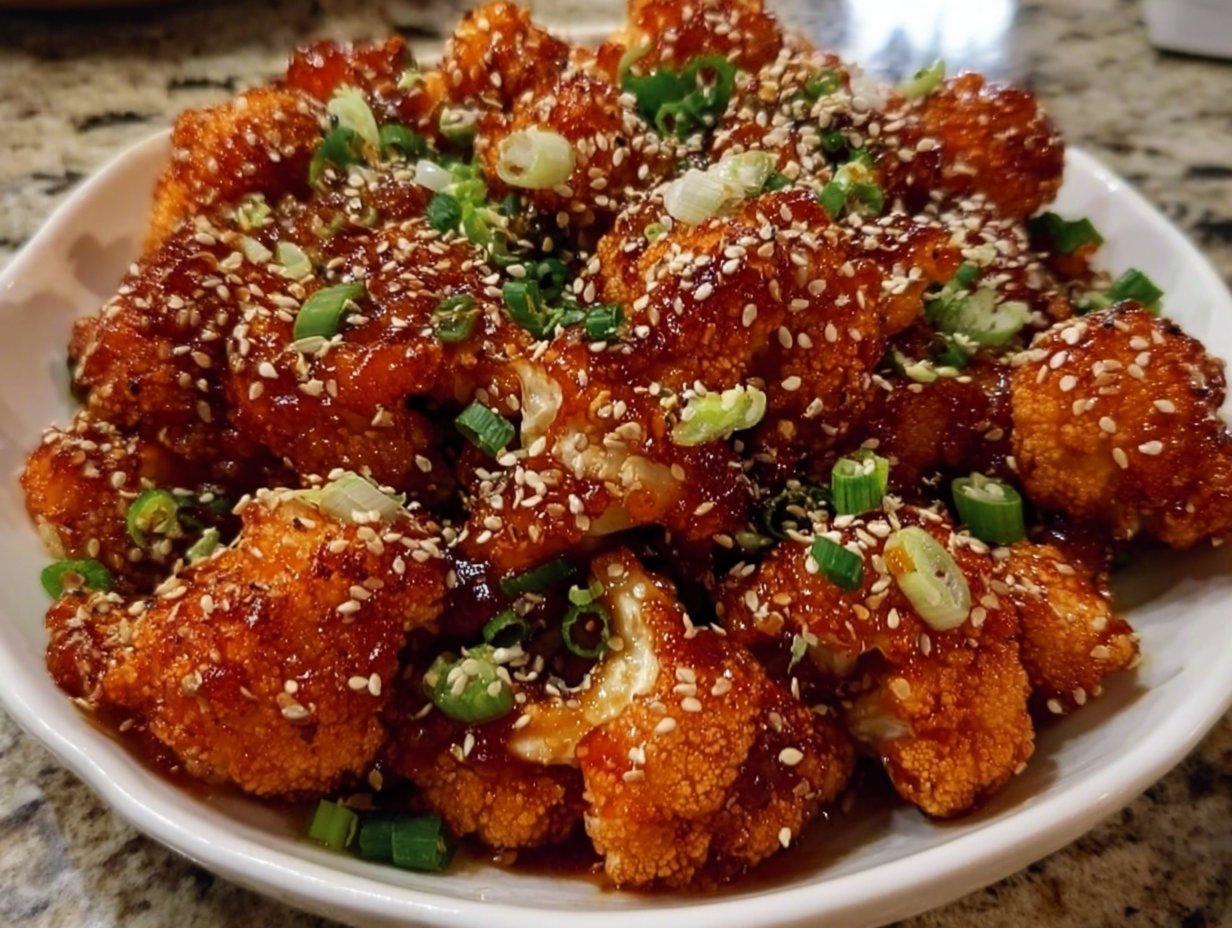
- Garnish with toasted sesame seeds and sliced green onions before serving. The sesame adds an earthy crunch and the green onions bring a bright finish that cuts through the richness.
Fun Variations You Can Try
- Swap the cauliflower for small broccoli florets for a slightly different texture and a greener flavor profile.
- Make it vegan by using maple syrup instead of honey and double-check your gochujang for vegan labeling.
- Add a squeeze of lime and fresh cilantro for a different citrus lift that plays nicely with the spicy-sweet sauce.
- For extra crunch, toss in roasted peanuts or cashews just before serving.
- Turn it into a sheet-pan meal by adding sliced sweet potatoes or firm tofu to roast alongside the cauliflower.
- If you like it smokier, finish with a light sprinkle of smoked paprika or a splash of toasted sesame oil.
You can also vary the heat by adding a teaspoon of Korean chili flakes or using less gochujang for a milder dish. Small switches change the whole mood of the recipe and keep it exciting.
How I Love to Serve It
I often place a big bowl of Korean Baked Cauliflower in the center of the table with a few simple additions so everyone can help themselves. The glossy florets look pretty against a mound of steamed rice and a scattering of sesame seeds. Add a crunchy slaw on the side and dinner suddenly feels complete.
- Serve over warm jasmine or short-grain rice to soak up the saucy bits.
- Pair with a bright cucumber salad or quick pickled carrots for contrast.
- Add a protein like baked tofu or grilled shrimp and let each person spoon the cauliflower over their plate.
When friends come over on a chilly evening, I like to serve this with a side of crusty bread and roasted garlic. For a heartier meal, tossing it in with a creamy pasta feels indulgent. If you want to pair it with something richer, try a baked creamy cajun chicken pasta like this baked creamy cajun chicken pasta for a playful contrast of flavors. Plates look lived-in and warm and people always comment on the color and the aroma.
Helpful Tips from My Kitchen
Start with a dry cauliflower. After washing, make sure the florets are well dried so they roast rather than steam. Use room temperature ingredients for the sauce so the oil and gochujang combine smoothly. I like to taste the sauce before I simmer so I can adjust the salt and sweetness gently.
If you want more caramelization, spread the florets on a parchment-lined sheet and don’t move them too early. Let the edges brown naturally. When tossing the cauliflower in the sauce, use tongs to coat gently so you do not mash the tender pieces. If the sauce seems too thick, add a teaspoon of water or a splash of soy to loosen it.
For meal prep, roast the cauliflower fully and store it in an airtight container. Reheat on a baking sheet in a 350°F oven for 10 minutes to revive crisp edges. Keep garnishes separate and add them after reheating. Finally, when adjusting heat, remember that gochujang has both heat and sweetness so balancing with rice vinegar or a squeeze of citrus brightens the flavor without drowning the spice.
Important Cooking Reminders
- Preheat the oven fully to 400°F so the cauliflower starts roasting immediately.
- Spread florets in a single layer to avoid steaming.
- Use a rimmed baking sheet to catch any drips from the sauce.
- Roasted cauliflower stores in the fridge for up to 4 days in an airtight container.
- Reheat in the oven at 350°F for best texture, not the microwave.
- Taste the sauce before adding honey or maple syrup, then adjust for balance.
- Keep garnishes separate until serving to maintain freshness.
- Be cautious when simmering the sauce; gochujang can splatter if boiled too hard.
Nutritional Information (Estimated)
Per serving this dish is moderate in calories and offers a good amount of fiber from cauliflower. Estimated values per serving (assuming four servings): about 150 to 220 calories depending on how much oil and honey you use. Carbohydrates are mostly from the cauliflower and the small amount of honey or maple syrup. Fat comes mainly from olive oil and sesame oil. Protein is modest; add a side of tofu or chicken for a protein boost.
- Calories: ~180 kcal
- Carbs: ~12–18 g
- Fat: ~10–14 g
- Protein: ~4–6 g
Recipe Details
- Prep Time: 10 minutes
- Cook Time: 30 minutes
- Total Time: 40 minutes
- Yield: Serves 4
Common Questions You Might Have
Can I make this gluten free?
Yes. Use tamari or a certified gluten-free soy sauce instead of regular soy. Check your gochujang label since some brands include wheat. If you need to avoid wheat, seek out a gluten-free gochujang or make a quick substitute using miso and Korean red pepper flakes.
How can I make it less spicy for kids?
You can reduce the gochujang to one tablespoon and add a touch more honey or maple syrup. Another option is to mix half gochujang and half tomato paste with a little extra sweetener. Serve the sauce on the side so everyone can decide how much heat they want.
Will this freeze well?
Roasted cauliflower can be frozen but the texture softens after thawing. For best results, freeze the plain roasted cauliflower without the sauce in a single layer on a tray, then transfer to a freezer bag. Reheat in the oven and toss with fresh sauce after reheating. If you want to freeze with sauce, expect a softer texture when reheated.
Conclusion
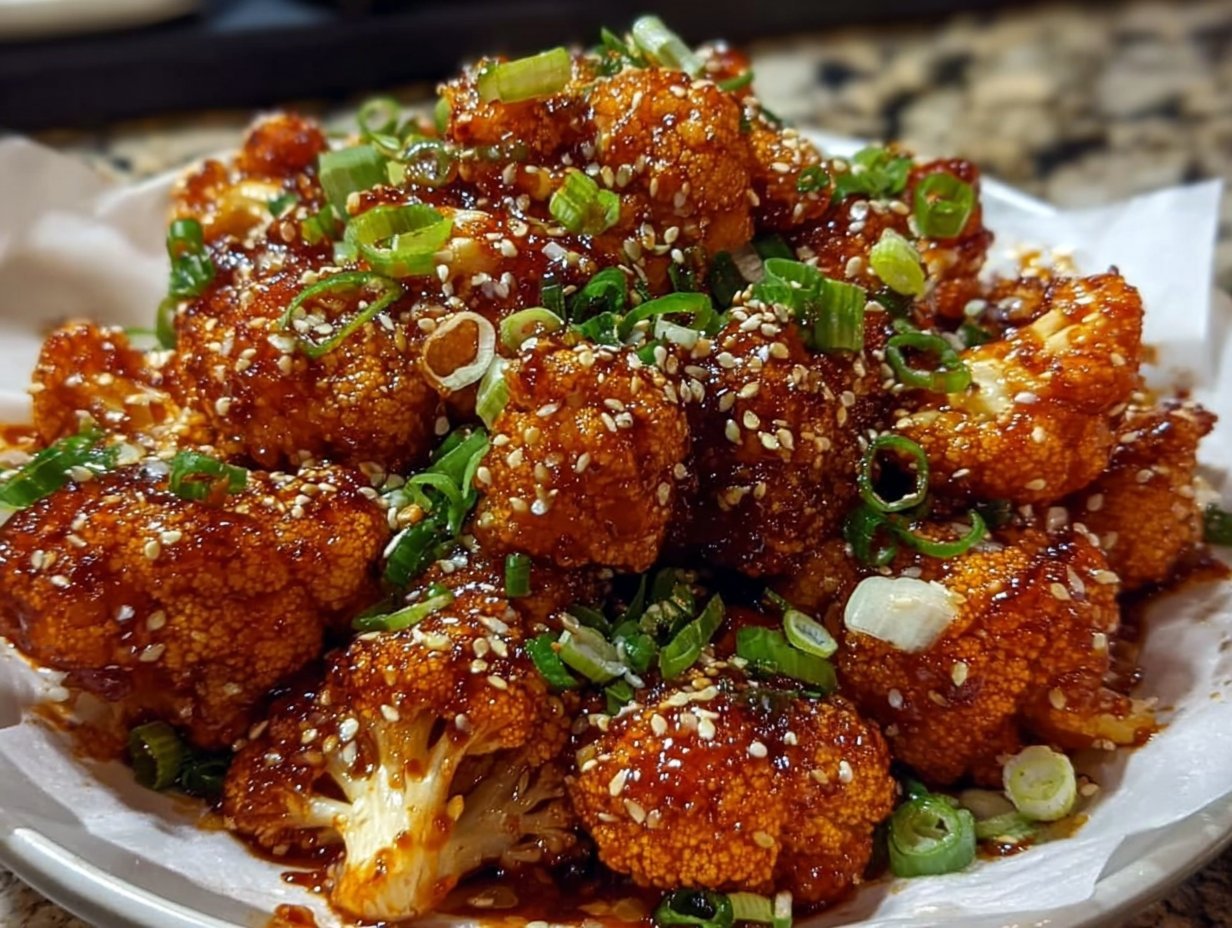
When you pull the tray from the oven and see those golden-brown florets glistening with a spicy-sweet coating, you will understand why this dish is a keeper. It is the kind of recipe that comforts without weighing you down. It is easy enough for a weeknight yet special enough for a casual dinner with friends. The toasted sesame seeds pop against the warm, glossy sauce. The green onions add a breath of freshness that makes each bite feel balanced and bright.
I love how Korean Baked Cauliflower asks for so little fuss yet delivers big personality. It reminds me that simple ingredients, roasted and dressed with care, can feel celebratory. If you try it, take a moment to breathe in the aroma as it comes from the oven. Plate it with something you love and savor the way a humble vegetable can take center stage. Thank you for letting me share one of my favorite cozy recipes with you.
Print
Korean Baked Cauliflower
- Total Time: 40 minutes
- Yield: 4 servings 1x
- Diet: Vegetarian
Description
A comforting dish that combines roasted cauliflower with a spicy-sweet sauce, offering a cozy yet adventurous meal.
Ingredients
- 1 large head cauliflower, cut into florets
- 2 tablespoons olive oil
- 1/2 teaspoon salt
- 1/2 teaspoon black pepper
- 2 tablespoons gochujang
- 2 tablespoons soy sauce
- 1 tablespoon sesame oil
- 1 tablespoon honey or maple syrup
- 1 teaspoon rice vinegar
- 2 garlic cloves, minced
- 1 teaspoon fresh ginger, grated
- 1 teaspoon toasted sesame seeds, for garnish
- 2 green onions, sliced, for garnish
Instructions
- Preheat your oven to 400°F (200°C) with the rack in the middle.
- In a large mixing bowl, toss the cauliflower florets with olive oil, salt, and black pepper until evenly coated.
- Spread the cauliflower in a single layer on a baking sheet.
- Roast for 25 to 30 minutes, flipping halfway through, until golden brown and crispy.
- While the cauliflower roasts, prepare the sauce by whisking together the gochujang, soy sauce, sesame oil, honey or maple syrup, rice vinegar, minced garlic, and grated ginger.
- If desired, simmer the sauce in a small saucepan over medium heat for 3 to 5 minutes until thickened.
- Once the cauliflower is done, toss it in the sauce, coating well, and return it to the oven for an additional 5 minutes.
- Garnish with toasted sesame seeds and sliced green onions before serving.
Notes
For added crunch, consider tossing in roasted peanuts or cashews before serving. You can adjust the heat level by varying the amount of gochujang.
- Prep Time: 10 minutes
- Cook Time: 30 minutes
- Category: Side Dish
- Method: Baking
- Cuisine: Korean
Nutrition
- Serving Size: 1 serving
- Calories: 180
- Sugar: 6g
- Sodium: 500mg
- Fat: 12g
- Saturated Fat: 2g
- Unsaturated Fat: 10g
- Trans Fat: 0g
- Carbohydrates: 18g
- Fiber: 4g
- Protein: 6g
- Cholesterol: 0mg
Keywords: cauliflower, Korean, baked, vegetarian, side dish, roasted